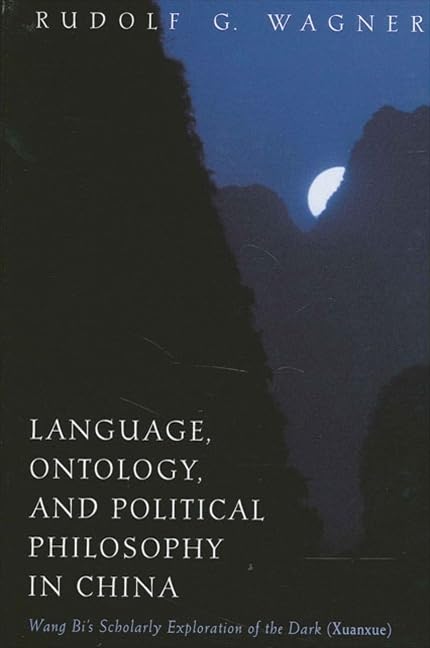

Language, Ontology, and Political Philosophy in China (Suny Series in Chinese Philosophy and Culture) by Rudolf G. Wagner

Language, Ontology, and Political Philosophy in China (Suny Series in Chinese Philosophy and Culture)

Rudolf G. Wagner
270 pages
SUNY Press
Jan 2003
Paperback
Religion & Spirituality WSBN
0
Readers
0
Reviews
0
Discussions
0
Quotes
With the collapse of the Han dynasty in 220 C.E., an entire system of state and intellectual organization fell apart. The brilliant Wang Bi and his generation of young scholars grew up in a no-man's land without teachers and orthodoxy. Defying the established school divisions, they set out on a vigorous and daring new philosophical inquiry which came to be known as Xuanxue, the "Scholarly Exploration of the Dark." They found "subtle pointers" in the Laozi, the Book of Changes, and the Analects of Confucius about the inequity of language and the ensuing need to proceed by "subtle" indications that ultimately led to a philosophy of Being.. In this book, Rudolf G. Wagner shows how Wang Bi's sophisticated analysis of "subtle pointers" in the language of the Laozi developed into an ontology that served as the basis for a political philosophy of the ruler/subject relationship and a guide for the public performance of an enlightened ruler. Wang Bi's work initiated the reading of the Laozi, the Book of Changes and the Analects as philosophical texts and has had a lasting impact on Chinese philosophy.

No discussions yet. Join BookLovers to start a discussion about this book!

No reviews yet. Join BookLovers to write the first review!

No quotes shared yet. Join BookLovers to share your favorite quotes!