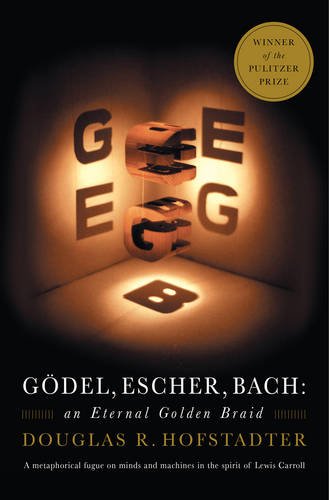
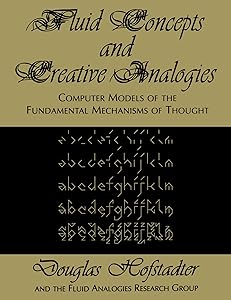
Douglas Hofstadter’s book is concerned directly with the nature of “maps” or links between formal systems. However, according to Hofstadter, the formal system that underlies all mental activity transcends the system that supports it. If life can grow out of the formal chemical substrate of the cell, if consciousness can emerge out of a formal system of firing neurons, then so too will computers attain human intelligence. Gödel Escher and Bach is a wonderful exploration of fascinating ideas at the heart of cognitive science: meaning, reduction, recursion, and much more.
No discussions yet. Join BookLovers to start a discussion about this book!
reconciling the software of the mind with the hardware of brain
This book has a preface by the author. After twenty (20) or so pages, I was thinking, "Can I understand what he wrote about in the rest of this book?" but I persevered and read the whole book. This book is intense, like any philosophical book. His motive is to "suggest ways of reconciling the software of the mind with the hardware of brain" and that is quite an endeavor he succeeds at, sort of. No wonder he won the Pulitzer prize for this book. He talks of how he came to write and develop the book, and then, upon preparing for republication, he decides to not redo the book: it is what it is, from back then, any addition or correction would create a new book, and it can been seen every so often he imagines some stuff that we use daily, like spell correction, that were just not available back then. If he was to do that, he might as well write a whole new book, and that was not in the cards, nor was it the purpose of the new edition. Gödel goosed him to realize the notions he writes about, but Escher and Bach represent examples of what Gödel was writing and he is thinking about. As you read the introduction you realize this is one educated and well rounded fellow. He describes the development of Bach's preludes and fugues like a music teacher (I realized that I have a recording of Wanda Landowsky playing "The Well-Tempered Clavier" Book 1, preludes and fugues, but that did not help me understand as you will see). Bach worked up various themes and notions through his music and than then did some fancy finagling and out came some thing wild and crazy wonderful. I listened to the recording I have to no avail. This is something you get to know by playing and playing the tunes, a lot, for yourself, but Mr. Hofstadter's exposition explains what is what for you. Escher is easier (visual experiences are more important or easier to comprehend than aural experiences). The pictures are presented as examples of repetition or growth from one thing into another. The idea of repea...
No quotes shared yet. Join BookLovers to share your favorite quotes!
Earn Points
Your voice matters. Every comment, review, and quote earns you reward points redeemable for Bitcoin.