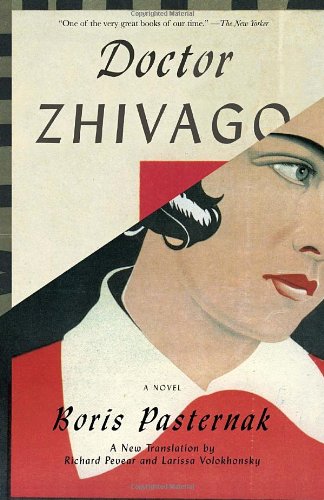
Doctor Zhivago by Boris Pasternak 


       			,

Doctor Zhivago

Boris Pasternak ,
675 pages
Vintage Classics
Oct 2011
Literature & Fiction WSBN
3
Readers
1
Reviews
0
Discussions
0
Quotes
<p>First published in Italy in 1957 amid international controversy, <i>Doctor Zhivago</i> is the story of the life and loves of a poet/physician during the turmoil of the Russian Revolution. Taking his family from Moscow to what he hopes will be shelter in the Ural Mountains, Zhivago finds himself instead embroiled in the battle between the Whites and the Reds. Set against this backdrop of cruelty and strife is Zhivago's love for the tender and beautiful Lara, the very embodiment of the pain and chaos of those cataclysmic times. Pevear and Volokhonsky masterfully restore the spirit of Pasternak's original - his style, rhythms, voicings, and tone - in this beautiful translation of a classic of world literature.</p>
Join the conversation

No discussions yet. Join BookLovers to start a discussion about this book!

The movie isn't much like the book

Having grown older, wiser and much more cynical: upon my most recent viewing of David Lean's Doctor Zhivago, I determined that Zhivago's relationship with Lara, apart from being a love story, was more than a little decadent. I began to consider why a novel that appeared to be mostly a historical romance set against the background of a very serious revolution had won a nobel prize; so I decided to read it. From the beginning, the story was quite different from the Lean production. There is no balalaika for instance. Despite Pasternak's real life training in classical music, music never features prominently in the novel. The structure is intriguing: Books one a two are subdivided into parts one through seventeen that run sequentially through both portions of the novel; the chapters of each part are numbered and often only or two pages very much like stanzas. Perhaps the original was in verse form. Right away there are unusual occurrences. The boy Yuri climbs on top of his mother's grave at the funeral and is described as looking like a wolf cub about to howl as he begins to cry. Wolves and dogs appear periodically throughout the novel having some connection to each other though maybe different roles. The natural world gets intensified blizzards, the movement of wheat in a field as well as the sound of a water fall take on a near life of their own. While not quite manifesting magical powers, these features of nature are much more than scenes of great beauty or terrifying vastness. The familiar storyline plays out with a whole array of characters not featured in the film. There are many discussions of politics. The uncle who was a former priest may represent the Tolstoyan perspective. There really isn't a quasi nemesis brother who is a Bolshevik. Instead there is a Jewish boy who is so taken with Orthodoxy he seems confused. The half-brother appears occasionally offering assistance whenever he can. Many themes emerge in the novel becoming much more pronounced in Book...

No quotes shared yet. Join BookLovers to share your favorite quotes!

Earn Points
Your voice matters. Every comment, review, and quote earns you reward points redeemable for Bitcoin.
Comment +5 pts Review +20 pts Quote +7 pts Upvote +1 pt
BookMatch Quiz
Find books similar to this one
About this book
Pages 675
Publisher Vintage Classics
Published 2011
Readers 3