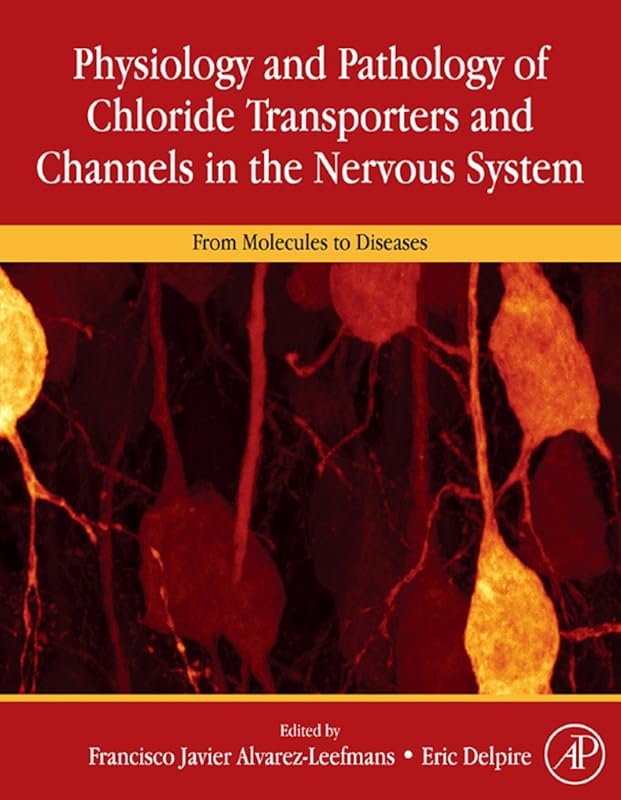
Physiology and Pathology of Chloride Transporters and Channels in the Nervous System: From Molecules to Diseases by F. Javier Alvarez-Leefmans MD, PhD

Physiology and Pathology of Chloride Transporters and Channels in the Nervous System: From Molecules to Diseases

F. Javier Alvarez-Leefmans MD, PhD
630 pages
Academic Press
Aug 2009
Hardcover
Health, Mind & Body WSBN
0
Readers
0
Reviews
0
Discussions
0
Quotes
The importance of chloride ions in cell physiology has not been fully recognized until recently, in spite of the fact that chloride (Cl-) , together with bicarbonate, is the most abundant free anion in animal cells, and performs or determines fundamental biological functions in all tissues. For many years it was thought that Cl- was distributed in thermodynamic equilibrium across the plasma membrane of most cells. Research carried out during the last couple of decades has led to a dramatic change in this simplistic view. We now know that most animal cells, neurons included, exhibit a non-equilibrium distribution of Cl- across their plasma membranes. Over the last 10 to 15 years, with the growth of molecular biology and the advent of new optical methods, an enormous amount of exciting new information has become available on the molecular structure and function of Cl- channels and carriers. In nerve cells, Cl- channels and carriers play key functional roles in GABA- and glycine-mediated synaptic inhibition, neuronal growth and development, extracellular potassium scavenging, sensory-transduction, neurotransmitter uptake and cell volume control. Disruption of Cl- homeostasis in neurons underlies pathological conditions such as epilepsy, deafness, imbalance, brain edema and ischemia, pain and neurogenic inflammation. This book is about how chloride ions are regulated and how they cross the plasma membrane of neurons. It spans from molecular structure and function of carriers and channels involved in Cl- transport to their role in various diseases.- The first comprehensive book on the structure, molecular biology, cell physiology, and role in diseases of chloride transporters / channels in the nervous system in almost 20 years- Chloride is the most abundant free anion in animal cells. THis book summarizes and integrates for the first time the important research of the past two decades that has shown that Cl- channels and carriers play key functional roles in GABA- and glycine-mediated synaptic inhibition, neuronal growth and development, extracellular potassium scavenging, sensory-transduction, neurotransmitter uptake and cell volume control- The first book that systematically discusses the result of disruption of Cl- homeostasis in neurons which underlies pathological conditions such as epilepsy, deafness, imbalance, brain edema and ischemia, pain and neurogenic inflammation- Spanning topics from molecular structure and function of carriers and channels involved in Cl- transport to their role in various diseases- Involves all of the leading researchers in the field- Includes an extensive introductory section that covers basic thermodynamic and kinetics aspects of Cl- transport, as well as current methods for studying Cl- regulation, spanning from fluorescent dyes in single cells to knock-out models to make the book available for a growing population of graduate students and postdocs entering the field
Join the conversation

No discussions yet. Join BookLovers to start a discussion about this book!

No reviews yet. Join BookLovers to write the first review!

No quotes shared yet. Join BookLovers to share your favorite quotes!

Earn Points
Your voice matters. Every comment, review, and quote earns you reward points redeemable for Bitcoin.
Comment +5 pts Review +20 pts Quote +7 pts Upvote +1 pt
BookMatch Quiz
Find books similar to this one
About this book
Pages 630
Publisher Academic Press
Published 2009
Readers 0