No discussions yet. Join BookLovers to start a discussion about this book!
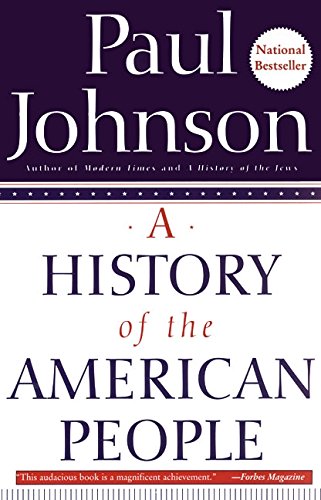
An English perspective on American history: overflowing with rich and deep insights
This is my first book to read by Paul Johnson. It exceeded every expectation I had. Having just finished “A short history of the United States“ by Robert V. Remini, and knowing that Johnson‘s book was three times the length, I waded in. It was not long before I recognized a genius at work. Johnson approaches American history from several perspectives. First, the book is a history of the US presidents. I’ve read several lengthy presidential biographies, and was amazed at how complete Johnson‘s descriptions and insights were as he treated each of our chief executives. If you simply read his summaries of each of the presidents, it would be a fabulous book. He found positive things in presidents who have historically received low ratings, and pointed out the flaws in those presidents who have received the best ratings. (Only exception: Abraham Lincoln, who is described in glowing terms exclusively.) Second, he uses statistics, which can be boring, to paint and fill out a holistic picture of every major time period. He explains developments in economics, employment, warfare, politics, etc. with page after page of statistics. Somehow, this helped to make the story come even more alive. Third, he writes history as a cohesive story. The book may be history in a strict sense, but it is narrative at its best. He connects the major threads of the American story from chapter to chapter, forward and backward. I got so hooked that I read hours at a time and simply could not stop. “Truth is stranger than fiction.” In the first 2/3 of the book, Johnson does not reveal his own political stance or cultural worldview. But by the time he gets to the late 20th century, however, his political conservatism becomes clear. Although I’m a bit more progressive than he is, I couldn’t argue with the statistics and facts he presented to make his case. He is a thinker’s conservative, without being an intellectual snob – one of the traits he hates most in East Coast newspapers and private schoo...
No quotes shared yet. Join BookLovers to share your favorite quotes!
Earn Points
Your voice matters. Every comment, review, and quote earns you reward points redeemable for Bitcoin.