Plautus
Titus Maccius Plautus (c. 254–184 BC) was a renowned Roman playwright of the Old Latin period, celebrated as Rome's greatest comic dramatist whose comedies are the earliest complete surviving works of Latin literature[1][2]. Born in Sarsina, Umbria (modern-day Emilia-Romagna, Italy), he adapted Greek New Comedy into distinctly Roman farces featuring stock characters like clever servants and boastful soldiers[1][3]. His 21 surviving plays, including "The Twin Menaechmi" and "Miles Gloriosus," significantly influenced later European drama, notably inspiring Shakespeare's "The Comedy of Errors"[3][6].
Sarsina, Umbria, Roman Republic
Wikipedia
Roman comedy
fabulae palliatae
farce
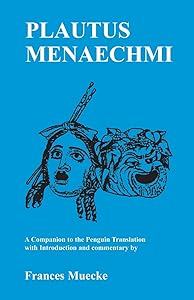
Plautus: Menaechmi: A Companion to the Penguin Translation (Classical Studies)
Plautus: The Merchant. The Braggart Warrior. The Haunted House. The Persian. (Loeb Classical Library No. 163) (English and Latin Edition)
The Merchant. The Braggart Soldier. The Ghost. The Persian (Loeb Classical Library)
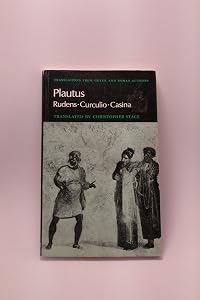
Plautus: Rudens, Curculio, Casina (Translations from Greek and Roman Authors)
The Baculum in Microtine Rodents