John Ruskin
John Ruskin (1819–1900) was an English polymath, art critic, writer, and social thinker of the Victorian era, renowned for his influential works on art, architecture, and society.[3][4] He championed the art of J.M.W. Turner in 'Modern Painters' (1843) and authored key texts like 'The Seven Lamps of Architecture' (1849) and 'The Stones of Venice' (1851–53), emphasizing connections between nature, art, and morality.[1][2] Later, he addressed social issues in works such as 'Unto This Last' (1860) and founded the Guild of St George.[2][5]
Art Criticism
Architecture
Social Commentary
Political Economy
Modern Painters Volume 1
The King of the Golden River
Letters of John Ruskin to Bernard Quaritch, 1867-1888
Modern Painters Volume II (of V)
John Ruskin's Letters to William Ward: With a Short Biography of William Ward
![On the Nature of Gothic Architecture: And Herein of the True Functions of the Workman in Art. Being the Greater Part of the 6Th Chapter of the 2Nd Vol. of 'stones of Venice'. [48 P.]](https://ecx.images-amazon.com/images/I/61xZBjl0DKL._SL300_.jpg)
On the Nature of Gothic Architecture: And Herein of the True Functions of the Workman in Art. Being the Greater Part of the 6Th Chapter of the 2Nd Vol. of 'stones of Venice'. [48 P.]
The True and the Beautiful in Nature, Art, Morals, and Religion: Beauty. Nature. Architecture. Sculpture
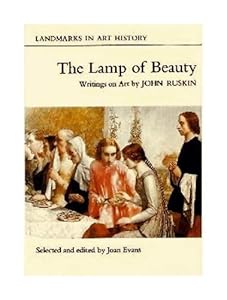
Lamp of Beauty: Writings on Art (Landmarks in art history)
Modern Painters, Part 3
The Art of England: Lectures Given in Oxford
The Stones of Venice: The Foundations