Isaac Newton
Sir Isaac Newton (1643–1727) was an English polymath and key figure in the Scientific Revolution, renowned for formulating the three laws of motion, the law of universal gravitation, and seminal contributions to optics and calculus.[2][4] He published his most influential work, *Philosophiæ Naturalis Principia Mathematica*, in 1687, which established classical mechanics and unified physics.[1][3] Newton also built the first reflecting telescope and advanced the scientific method, sharing credit with Leibniz for infinitesimal calculus.[2][4]
Physics
Mathematics
Optics
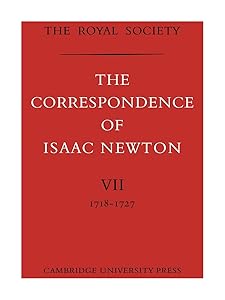
The Correspondence of Isaac Newton (The Correspondence of Isaac Newton 7 Volume Paperback Set)
The Mathematical Principles of Natural Philosophy; Volume 1
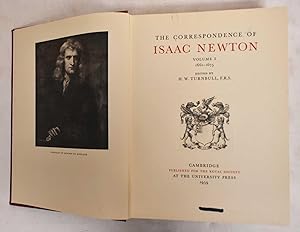
The Correspondence of Isaac Newton: Volume 1, 1661–1675
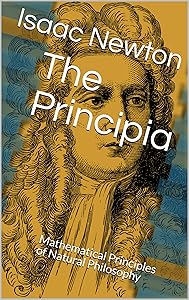
The Principia: Mathematical Principles of Natural Philosophy
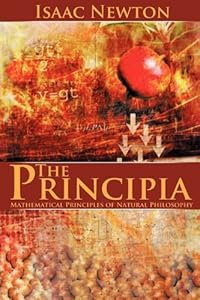
The Principia: Mathematical Principles of Natural Philosophy
The System of the World
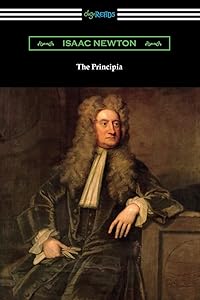
The Principia
Mathematical Principles of Natural Philosophy and His System of the World (Principia.)
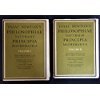
Isaac Newton's Philosophiae Naturalis Principia Mathematica: Facsimile of third edition (1726) with variant readings; Vols. 1 and 2. In Latin.
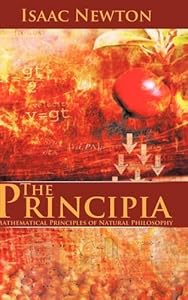
The Principia: Mathematical Principles of Natural Philosophy
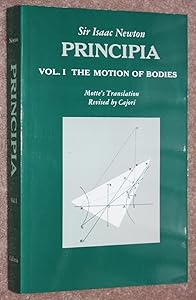
Principia : Vol. 1 The Motion of Bodies
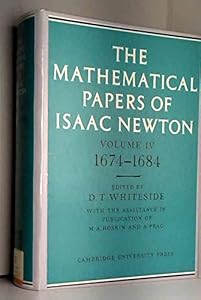
The Mathematical Papers of Isaac Newton: Volume 4, 1674–1684 (The Mathematical Papers of Sir Isaac Newton)