Home/Books/Christian Books/
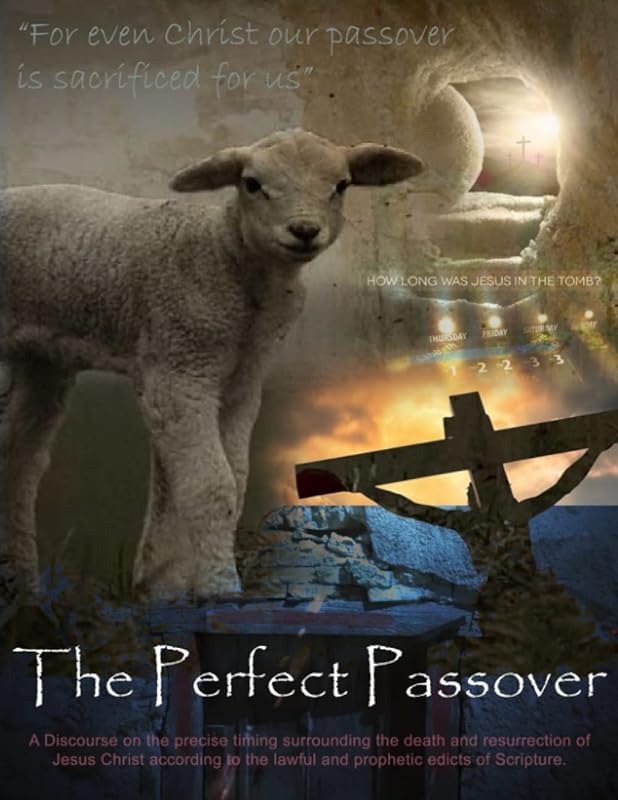
The Perfect Passover: A discourse on the precise timing of the crucifixion and resurrection of Jesus Christ according to the lawful and prophetic edicts of Scripture.
The Perfect Passover: A discourse on the precise timing of the crucifixion and resurrection of Jesus Christ according to the lawful and prophetic edicts of Scripture.
If Jesus was crucified on a Friday, buried by sunset, and then risen by the following Sunday morning, how could this equate to Him spending three days and three nights in the grave? The Lord Himself prophesied of this in Matthew 12:40, saying that He would give to that generation the sign of the prophet Jonas, with regards to the timing and circumstances of His burial and resurrection, saying, "For as Jonas was three days and three nights in the whale's belly; so shall the Son of man be three days and three nights in the heart of the earth". But isn't there only two nights from a Friday afternoon to a Sunday morning?. This puzzle has perplexed the minds of many earnest seekers into the chronology of the gospel accounts, and has based the cause of debate in Christian theology and apologetics for centuries. To be able to explain the precise sequence and timing of the events surrounding the trial, crucifixion, death, burial, and resurrection of the Lord and Saviour of the world Jesus Christ, according to the chronological details provided in the scriptures. Some suggest that the prophecy was a metaphor to allude to something less literal than the plain meaning of the words, or that there must have been some kind of a different way of reckoning time, but the timing Jesus communicated in His prediction is clear, and there is just no way to produce three nights from the end of Friday to the start of Sunday, by any system of counting.. A 'Good Friday' crucifixion is the most widely held view, and the traditional day celebrated with Easter, but just when did the crucifixion of Jesus actually take place? Generally, there has been a lot of difficulty in reconciling all of the passages of Scripture, that piece together the precise order and timing of the pivotal events that happened over those key days surrounding the cross, without leaving any contradictions. This has left the door wide open to textual criticism, misunderstanding, and challenges with regards to the effective communication of the details of a time frame of biblical narrative, which is of such interest and centrality to the Christian faith.. Another issue is did Jesus die before or after the Passover? John's account (John 19:30-34) seems to indicate that Jesus died before the Passover customs, (as the religious authorities wanted the bodies removed before the time they kept the Passover) , while parts of Mark's account (Mark 14:12-16) seem to place the death of Jesus after the Passover (as He had eaten a Passover meal with His disciples the night leading into His arrest and crucifixion) . The holy feast days of God's biblical calendar were not only meant to be kept by Israel every year for the sake of only religious compliance, but they were also prophetic - they pointed to the Savior (Hebrews 10:1-8) .. It's no coincidence that Jesus died on Passover, the same day God saved the Hebrews from the death in Egypt by having the people place the blood of lambs on their doorposts. It's no coincidence that the Bread of Life, who was void of all sin, lay in a stone tomb for the feast of Unleavened Bread, (as leaven symbolizes sin) . Again, it's no coincidence that the first begotten of the dead rose on the third day, which was the feast of First Fruits.. This study book will get into the Bible to explore more behind these connections, as well as finally resolve, once and for all, any of the difficult issues of scriptural reconciliation that have challenged so many for so long, with regards to the counting of the three days and three nights and ordering of events surrounding the death and resurrection of Christ. This will all be presented to you in this book, through an opening up of the ancient Hebrew calendar, to discover how days, hours, weeks, months, and sabbaths, work according to the biblical system, with detailed charts, to establish a solid understanding of the timing, and prophetic significance, regarding the Perfect Passover of God.