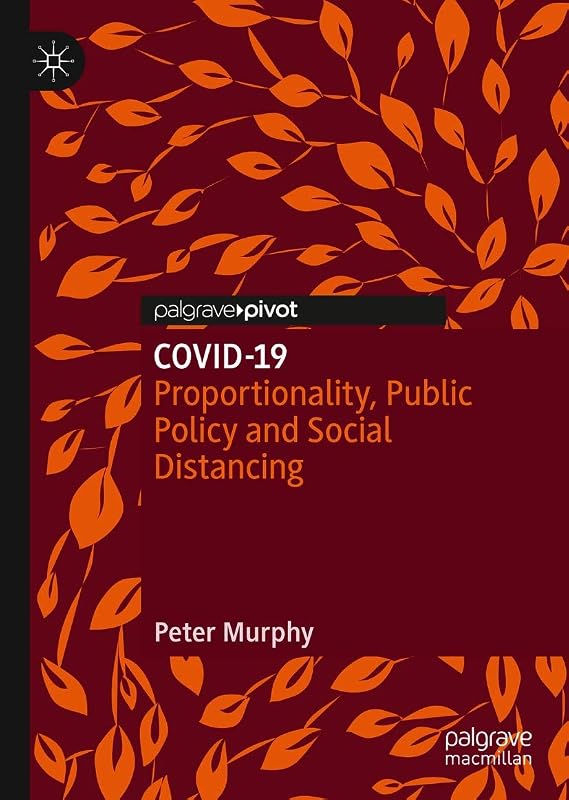
COVID-19: Proportionality, Public Policy and Social Distancing by Peter Murphy

COVID-19: Proportionality, Public Policy and Social Distancing

Peter Murphy
158 pages
Palgrave Pivot
Nov 2020
Hardcover
Default WSBN
0
Readers
0
Reviews
0
Discussions
0
Quotes
COVID-19: Proportionality, Public Policy and Social Distanceexplores the social and political response to the COVID-19 pandemic. It details the sociological aspects of the spread of the virus, the role played by social distancing in virus mitigation, and the comparative effect of social proximity and distance on national anti-viral behavior. Peter Murphy discusses various public policy approaches to the pandemic and their successes and failures. In this engaging analysis, he investigates the way that contemporary societies think about risk, threat and harm, and how social mood affected the response to COVID-19. Read more Continue reading Read less FROM THE BACK COVER
'This impressive book analyses the medical and social impacts of the Covid-19 virus pandemic. The medical impact has been extensive from trying to understand this new virus, create a new vaccine, and shift medical resources in the face of large infection and death rates. This ambitious book covers all of these topics under the equally important idea that Covid-19 is not simply a medical disease, but also a social one. This is the real strength of Peter Murphy's book. He analyses the extensive social impacts from public and economic policy including lockdowns and wage subsidies, to social ones including changes to our habits that are now known as 'social distancing' - proximity, touch, hygiene. He argues that there were more than proportional measures on some policies and less than proportional ones on others.'

Professor John Rundell, Editor-in-Chief of Critical Horizons and the Social and Critical Theory book series


COVID-19: Proportionality, Public Policy and Social Distance explores the social and political response to the COVID-19 pandemic. It details the sociological aspects of the spread of the virus, the role played by social distancing in virus mitigation, and the comparative effect of social proximity and distance on national anti-viral behavior. Peter Murphy discusses various public policy approaches to the pandemic and their successes and failures. In this engaging analysis, he investigates the way that contemporary societies think about risk, threat and harm, and how social mood affected the response to COVID-19.


Peter Murphy is the author of The Political Economy of Prosperity (2020) , Limited Government (2018) Auto-Industrialism (2017) , Universities and Innovation Economies (2015) and The Collective Imagination (2012) , among other books. He is Adjunct Professor of Social Sciences at La Trobe University and in The Cairns Institute at James Cook University, Australia.

--This text refers to the hardcover edition. ABOUT THE AUTHOR
Peter Murphy is the author of The Political Economy of Prosperity (2020) , Limited Government (2018) Auto-Industrialism (2017) , Universities and Innovation Economies (2015) and The Collective Imagination (2012) , among other books. He is Adjunct Professor of Social Sciences at La Trobe University and in The Cairns Institute at James Cook University, Australia. --This text refers to the hardcover edition. Read more Continue reading Read less
Join the conversation

No discussions yet. Join BookLovers to start a discussion about this book!

No reviews yet. Join BookLovers to write the first review!

No quotes shared yet. Join BookLovers to share your favorite quotes!

Earn Points
Your voice matters. Every comment, review, and quote earns you reward points redeemable for Bitcoin.
Comment +5 pts Review +20 pts Quote +7 pts Upvote +1 pt
BookMatch Quiz
Find books similar to this one
About this book
Pages 158
Publisher Palgrave Pivot
Published 2020
Readers 0