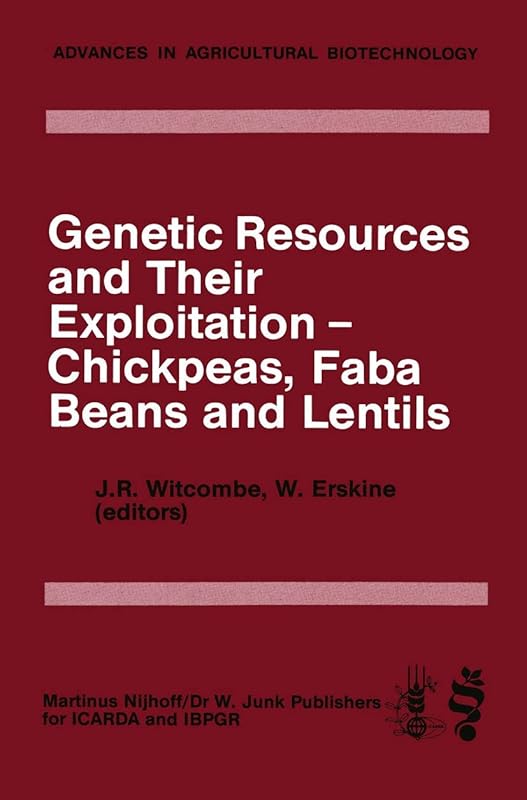
Genetic Resources and Their Exploitation — Chickpeas, Faba beans and Lentils (Advances in Agricultural Biotechnology) by J.R. Witcombe

Genetic Resources and Their Exploitation — Chickpeas, Faba beans and Lentils (Advances in Agricultural Biotechnology)

J.R. Witcombe
272 pages
Springer
Oct 2011
Paperback
Home & Garden WSBN
0
Readers
0
Reviews
0
Discussions
0
Quotes
Chickpeas, faba beans and lentils are important pulse crops in the Mediterranean regi on and Mi ddl e East, where thei r hi gh protei n seed nutritionally complement cereal grain in the human diet. The by-products of these crops serve as a valuable feed for animals. Thanks to their ability to fix atmospheric nitrogen, the inclusion of these crops in the cropping system helps in the maintenance of the productivity of the soil and reduces the dependence of the farmer on fertilizer nitrogen to realise good yields. Being the site of original domestication of these legumes, the Fertile Crescent is bel ieved to possess their vast genetic diversity. In order to prevent the erosion of this genetic di'/ersity and to preserve it for posterity, it is necessary that a major effort is made for its expeditious collection, evaluation, documentation and safe storage. The International Center for Agricultural Research in the Dry Areas (ICARDA) being located in the Fertile Crescent has, within its mandate, the responsibility to act as a world centre for the work on the genetic resources of kabuli chickpeas, faba beans and lentils. The International Board of Plant Genetic Resources (IBPGR) has been strongly supporting ICARDA in this important activity.
Join the conversation

No discussions yet. Join BookLovers to start a discussion about this book!

No reviews yet. Join BookLovers to write the first review!

No quotes shared yet. Join BookLovers to share your favorite quotes!

Earn Points
Your voice matters. Every comment, review, and quote earns you reward points redeemable for Bitcoin.
Comment +5 pts Review +20 pts Quote +7 pts Upvote +1 pt
BookMatch Quiz
Find books similar to this one
About this book
Pages 272
Publisher Springer
Published 2011
Readers 0