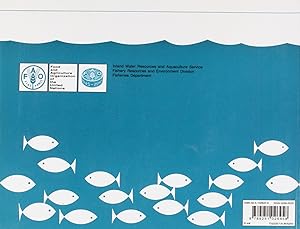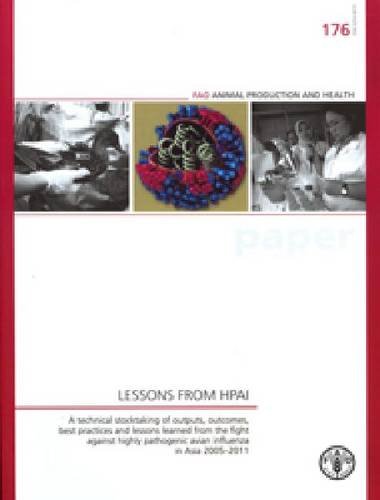
Lessons from HPAI: A Technical Stocktaking of Outputs, Outcomes, Best Practices and Lessons Learned from the Fight Against Highly Pathogenic Avian ... (FAO Animal Production and Health Papers) by Food and Agriculture Organization of the United Nations

Lessons from HPAI: A Technical Stocktaking of Outputs, Outcomes, Best Practices and Lessons Learned from the Fight Against Highly Pathogenic Avian ... (FAO Animal Production and Health Papers)

Food and Agriculture Organization of the United Nations
112 pages
FAO
Jun 2013
Paperback
Health, Mind & Body WSBN
0
Readers
0
Reviews
0
Discussions
0
Quotes
Since 2004, the Food and Agriculture Organization of the United Nations (FAO) has been at the forefront of the global effort to fight H5N1 highly pathogenic avian influenza (HPAI) , which emerged in Southeast Asia in 2003. At its peak, the disease affected 63 countries in Asia, Europe, the Middle East and Africa, and comprehensive strategies and systems for surveillance, detection, diagnosis and response were put in place at the international, regional and national levels. . These strategies, which were developed in consultation with governments, regional organizations and non-governmental organizations - and were implemented by FAO in collaboration with international agencies such as the World Health Organization (WHO) , the World Organisation for Animal Health (OIE) and the United Nations Children's Fund (UNICEF) - have begun to prevail. The disease has now been eliminated from most countries in the world, although it remains endemic in parts of Asia including China, Viet Nam, Indonesia, Bangladesh, and in large parts of eastern India. . Over the last three to four years, FAO's role and priority has evolved from that of a predominantly emergency response to one of long-term capacity building to improve surveillance, early detection and response in HPAI-infected and at-risk countries. FAO has also broadened its HPAI program to include other high-impact diseases and EIDs, and has adopted a One Health approach to promote greater multisectoral and multidisciplinary participation. This transition has provided an opportunity to reflect on the work done so far to control HPAI in the Asia region, and to identify its impact and achievements, success stories, challenges, and lessons learned. This report represents the outcome of this reflection and brings together in one place the knowledge, insights and recommendations of experts with first-hand knowledge and over eight years' experience of dealing with H5N1 HPAI in Asia.

No discussions yet. Join BookLovers to start a discussion about this book!

No reviews yet. Join BookLovers to write the first review!

No quotes shared yet. Join BookLovers to share your favorite quotes!