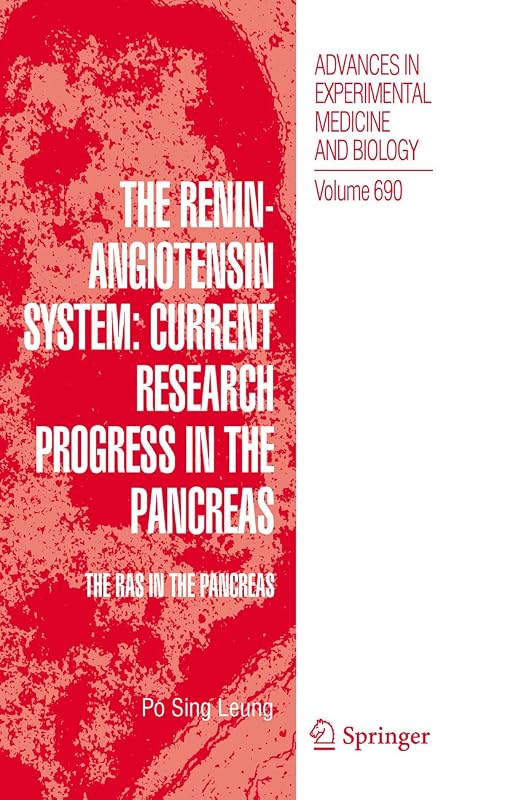
The Renin-Angiotensin System: Current Research Progress in The Pancreas: The RAS in the Pancreas (Advances in Experimental Medicine and Biology Book 690) by Po Sing Leung

The Renin-Angiotensin System: Current Research Progress in The Pancreas: The RAS in the Pancreas (Advances in Experimental Medicine and Biology Book 690)

Po Sing Leung
224 pages
Springer
Aug 2010
Hardcover
Health, Mind & Body WSBN
0
Readers
0
Reviews
0
Discussions
0
Quotes

Free account. We’ll keep this book ready while you join.

Find a copy

Formats and availability vary by store. As an Amazon Associate I earn from qualifying purchases.

The human pancreas consists of two organs in one: the exocrine gland made up of pancreatic acinar cells and duct cells that produce digestive enzymes and sodium bicarbonate, respectively; the endocrine gland made up of four islet cells, namely alpha-, beta-, delta- and PP-cells that produce glucagon, insulin, somatostatin and pancreatic polypeptide, respectively. While the physiological role of exocrine p- creas is to secrete digestive enzyme responsible for our normal digestion, absorption and assimilation of nutrients, the endocrine pancreas is to secrete islet peptide h- mones maintaining our glucose homeostasis. The pancreatic functions are nely regulated by neurocrine, endocrine, paracrine and/or intracrine mechanisms. Thus, dysregulation of these pathways should have signi cant impacts on our health and disease. Nevertheless, the underlying mechanisms by which pancreatic functions are regulated remain poorly understood. Recent basic science and clinical studies con rm myriad physiological and pathophysiological roles of the tissue renin-angiotensin systems (RAS) . Of parti- lar interest is the recent identi cation of a local and functional RAS in the pancreas, which in uences both its exocrine and endocrine function. Its role in the pat- genesis of pancreatic diseases including diabetes and pancreatitis is increasingly recognized, as is the therapeutic potential of RAS antagonism: RAS blockade l- its disease progression of type 2 diabetes mellitus and impaired glucose tolerance, and may also protect against pancreatic in ammation.
Join the conversation

No discussions yet. Join BookLovers to start a discussion about this book!

No reviews yet. Join BookLovers to write the first review!

No quotes shared yet. Join BookLovers to share your favorite quotes!

Earn Points
Your voice matters. Every comment, review, and quote earns you reward points redeemable for Bitcoin.
Comment +5 pts Review +20 pts Quote +7 pts Upvote +1 pt
Similar Books
Find books similar to this one
About this book
Pages 224
Publisher Springer
Published 2010
Readers 0