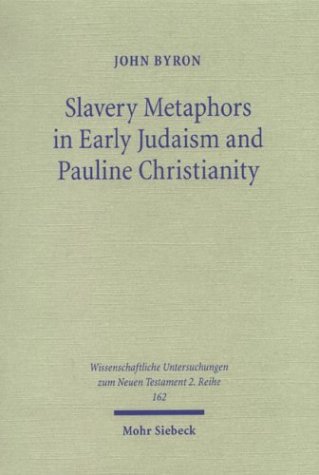

Slavery Metaphors in Early Judaism and Pauline Christianity: A Traditio-Historical and Exegetical Examination (Wissenschaftliche Untersuchungen Zum Neuen Testament 2.Reihe) by John Byron

Slavery Metaphors in Early Judaism and Pauline Christianity: A Traditio-Historical and Exegetical Examination (Wissenschaftliche Untersuchungen Zum Neuen Testament 2.Reihe)

John Byron
304 pages
Mohr Siebeck
May 2003
Paperback
Christian Books WSBN
0
Readers
0
Reviews
0
Discussions
0
Quotes
John Byron analyzes slavery metaphors in the Pauline Epistles by interpreting them from the background of Paul's Jewish heritage rather than Greco-Roman slavery. Slavery to God was a well-developed tradition in early Judaism which developed out of the Exodus event and continued to be reinterpreted throughout history. Jews identified themselves in contrast to non-Jews as slaves to God. In early Jewish literature one can detect a discussion surrounding what it meant to be a slave of God and how Jews should respond to episodes of enslavement under foreign oppressors. In this debate, the figure of Joseph became a paradigm of slavery to God and how Jews were to respond to slavery. Influenced by his Jewish heritage, Paul understands Christ as the paradigmatic slave of God. He interprets the movement from slavery to sin to slavery to God as a second Exodus: By being the obedient slave of Christ believers became the slaves of God.
Join the conversation

No discussions yet. Join BookLovers to start a discussion about this book!

No reviews yet. Join BookLovers to write the first review!

No quotes shared yet. Join BookLovers to share your favorite quotes!

Earn Points
Your voice matters. Every comment, review, and quote earns you reward points redeemable for Bitcoin.
Comment +5 pts Review +20 pts Quote +7 pts Upvote +1 pt
BookMatch Quiz
Find books similar to this one
About this book
Pages 304
Publisher Mohr Siebeck
Published 2003
Readers 0