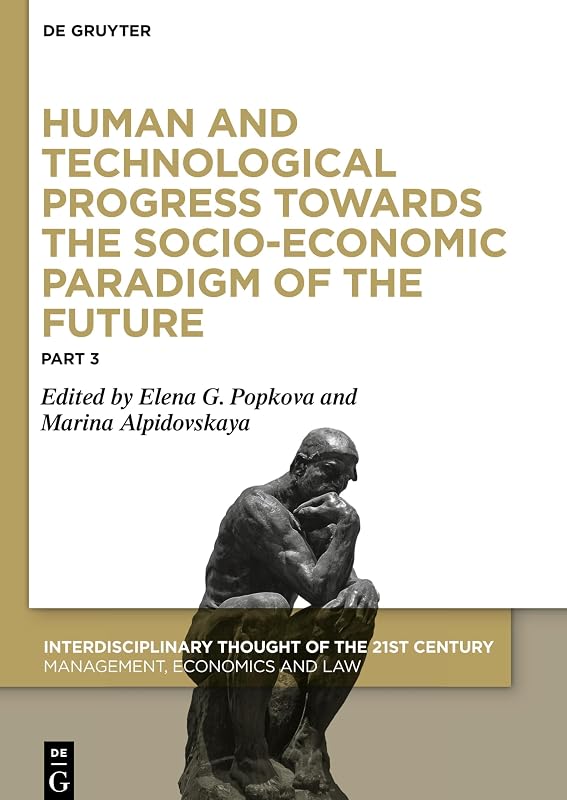
Human and Technological Progress Towards the Socio-Economic Paradigm of the Future: Part 3 (Interdisciplinary Thought of the 21st Century, 1/3) by Elena G. Popkova

Human and Technological Progress Towards the Socio-Economic Paradigm of the Future: Part 3 (Interdisciplinary Thought of the 21st Century, 1/3)

Elena G. Popkova
290 pages
De Gruyter
Aug 2020
Hardcover
Business & Investing WSBN
0
Readers
0
Reviews
0
Discussions
0
Quotes
This book determines the specific features of socio-economic transformations of various spheres of the national economy with a focus on the financial system. It considers the development of industrial holdings in the electric energy sphere and also studies the influence of technology on fish farming in modern Russia. The global factors of using digital technologies at the municipal level during creation of "green" and "smart" cities are analyzed.


The perspectives of development of tourism in the digital economy from the positions of supply and demand and are determined. The specifics of development of agricultural production in the age of digital transformations by the example of modern Russia are outlined, and "smart" agricultural platform, which allows for multiple increase of the agro-industrial complex's efficiency, is developed. New possibilities and need in reformation of the international monetary system in the conditions of the Fourth industrial revolution are determined.


The problems and perspectives of development of Eurasian stock markets in the modern economic conditions under the influence of wide distribution of digital technologies are systematized. Specific features of the evolution of the forms of money - from gold to crypto currencies are - are distinguished. Specific features of benchmarking of depreciation of currencies (inflation) under the influence of globalization and regionalization of the international monetary system are determined. The authors present a concept of the banking system of the future in the conditions of macro-economic instability, which stimulates financial crisis management of the national economy, and determine the role of banks in aggregation and redistribution of monetary resources in economy in the context of digital transformations.


Also, attention is paid to social consequences of digital modernization of the financial system - transformation of human's social life in the age of innovative banking is shown. Effectiveness of online banking, as a new form of payments that is popular in the digital economy, is analyzed. The authors formulate competencies that employees of banks of the future, which will function in the digital economy, should have and study the perspectives of digitization of the practice of tax administration based on technological processing and analytics of Big Data by the example of experience of modern Russia, as well as related transformation processes in the existing practice of the tax system organization.


A concept of organization and management of the national tax system in the conditions of robotization of production and consumption is developed, and the role of blockchain technologies in improvement of the modern Russian tax system is determined. The investment platform for the modern digital economy is offered. As a result, the scientific paradigm of formation of the digital financial system in the conditions of Industry 4.0 is formed.

Read more Continue reading Read less ABOUT THE AUTHOR
Elena G. Popkova, Volgograd State Technical University, Russia; Marina Alpidovskaya, Financial University under the Government, Russia

Read more Continue reading Read less
Join the conversation

No discussions yet. Join BookLovers to start a discussion about this book!

No reviews yet. Join BookLovers to write the first review!

No quotes shared yet. Join BookLovers to share your favorite quotes!

Earn Points
Your voice matters. Every comment, review, and quote earns you reward points redeemable for Bitcoin.
Comment +5 pts Review +20 pts Quote +7 pts Upvote +1 pt
BookMatch Quiz
Find books similar to this one
About this book
Pages 290
Publisher De Gruyter
Published 2020
Readers 0