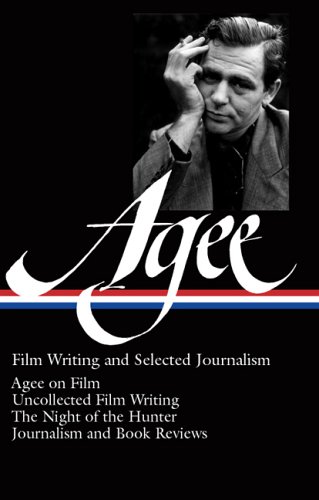
James Agee brought to bear all his moral energy, slashing wit, and boundless curiosity in the criticism and journalism that established him as one of the commanding literary voices of America at mid-century. In 1944 W. H. Auden called Agees film reviews for The Nation the most remarkable regular event in American journalism today. Those columns, along with much of the movie criticism that Agee wrote for Time through most of the 1940s, were collected posthumously in Agee on Film Reviews and Comments, undoubtedly the most influential writings on film by an American. Whether reviewing a Judy Garland musical or a wartime documentary, assessing the impact of Italian neorealism or railing against the compromises in a Hollywood adaptation of Hemingway, Agee always wrote of movies as a pervasive, profoundly significant part of modern life, a new art whose classics Chaplin, Dovzhenko, Vigo he revered and whose betrayal in the interests of commerce or propaganda he often deplored.