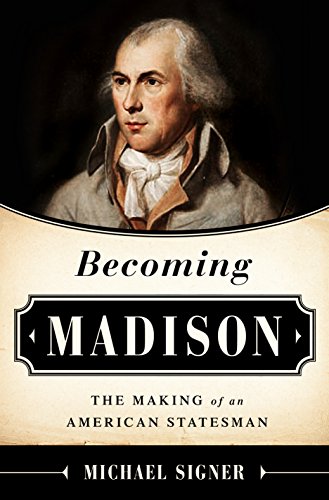
In 1941 the historian Irving Brant wrote, “Among all the men who shaped the present government of the United States of America,” Brant wrote, “the one who did the most is known the least.” Brant concluded, “When a man rises to greatness in youth, it is with his youth that we should first concern ourselves.” Seven decades have passed since Brant wrote those words. Yet, through the history’s increasingly dusty lens, Madison has become ever more a stranger. The default impression of Madison remains as remote and severe as the title of a 1994 book: If Men Were Angels: James Madison and the Heartless Empire of Reason. Most Americans, if they know anything about him at all, see him as calculating, intellectual, politically astute, dry, and remote.