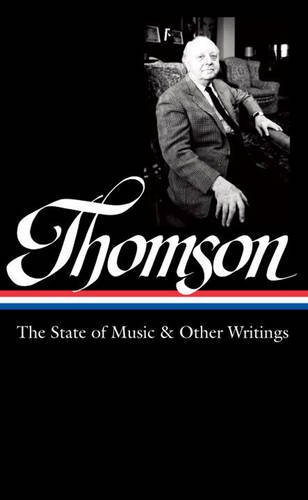
<b>An unprecedented collection of polemical and autobiographical writings by America's greatest composer-critic. </b>Following on the critically acclaimed 2014 edition of Virgil Thomson's collected newspaper music criticism, The Library of America and Pulitzer Prize-winning music critic Tim Page now present Thomson's other literary and critical works, a body of writing that constitutes America's musical declaration of independence from the European past. This volume opens with <i>The State of Music </i>(1939) , the book that made Thomson's name as a critic and won him his 14-year stint at the New York <i>Herald Tribune. </i>This no-holds-barred polemic, here presented in its revised edition of 1962, discusses the commissions, jobs, and other opportunities available to the American composer, a worker in a world of performance and broadcast institutions that, today as much as in Thomson's time, are dominated by tin-eared, non-musical patrons of the arts who are shocked by the new and suspicious of native talent. Thomson's autobiography, <i>Virgil Thomson </i>(1966) , is more than just the story of the struggle of one such American composer, it is an intellectual, aesthetic, and personal chronicle of the twentieth century, from World War I-era Kansas City to Harvard in the age of straw boaters, from Paris in the Twenties and Thirties to Manhattan in the Forties and after. A classic American memoir, it is marked by a buoyant wit, a true gift for verbal portrait-making, and a cast of characters including Aaron Copland, Gertrude Stein, James Joyce, Paul Bowles, John Houseman, and Orson Welles. <i>American Music Since 1910 </i>(1971) is a series of incisive essays on the lives and works of Ives, Ruggles, Varèse, Copland, Cage, and others who helped define a national musical idiom. <i>Music with Words </i>(1989) , Thomson's final book, is a distillation of a subject he knew better than perhaps any other American composer: how to set English - especially American English - to music, in opera and art song. The volume is rounded out by a judicious selection of Thomson's magazine journalism from 1957 to 1984 - thirty-seven pieces, most of them previously uncollected, including many long-form review-essays written for <i>The New York Review of Books.</i>