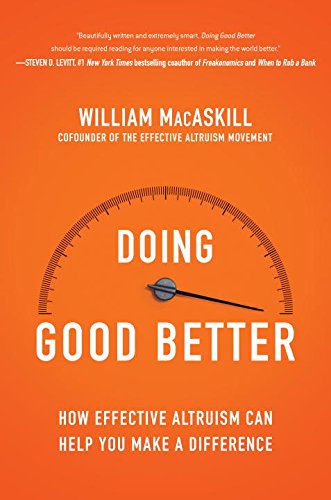
Most of us want to make a difference We donate our time and money to charities and causes we deem worthy choose careers we consider meaningful and patronize businesses and buy products we believe make the world a better placeUnfortunately we often base these decisions on assumptions and emotions rather than facts As a result even our best intentions often lead to ineffectivemdashand sometimes downright harmfulmdashoutcomes How can we do better While a researcher at Oxford trying to figure out which career would allow him to have the greatest impact William MacAskill confronted this problem head on He discovered that much of the potential for change was being squandered by lack of information bad data and our own prejudice As an antidote he and his colleagues developed effective altruism a practical data-driven approach that allows each of us to make a tremendous difference regardless of our resources Effective altruists believe that itrsquos not enough to simply do good we must do good better At the core of this philosophy are five key questions that help guide our altruistic decisions How many people benefit and by how much Is this the most effective thing I can do Is this area neglected What would have happened otherwise What are the chances of success and how good would success be By applying these questions to real-life scenarios MacAskill shows how many of our assumptions about doing good are misguided For instance he argues one can potentially save more lives by becoming a plastic surgeon rather than a heart surgeon measuring overhead costs is an inaccurate gauge of a charityrsquos effectiveness and it generally doesnrsquot make sense for individuals to donate to disaster relief MacAskill urges us to think differently set aside biases and use evidence and careful reasoning rather than act on impulse When we do thismdashwhen we apply the head and the heart to each of our altruistic endeavorsmdashwe find that each of us has the power to do an astonishing amount of good.