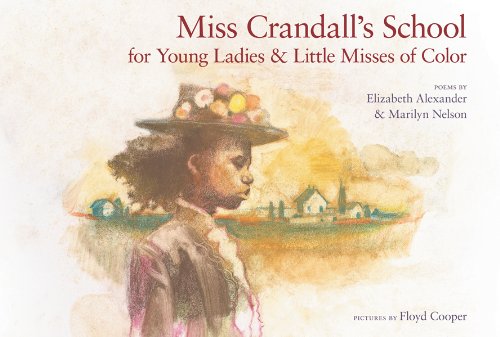
Her young students knew that Miss Crandall had committed no crime. They knew that the real criminals were the rich white residents of Canterbury, Connecticut, who had poisoned the school's water and set fire to the schoolhouse. But racism could not keep these girls from their schooling. Nor could hatred destroy the patience and compassion that Miss Crandall had taught them. From March of 1833 to September of 1834, when persecution forced the school to close, these African American women, many the daughters of freed slaves, learned that they deserved an education. What they needed was the courage to go after it.Poets Elizabeth Alexander and Marilyn Nelson have re-created the remarkable story of Prudence Crandall's school, using the sonnet form with innovative style.