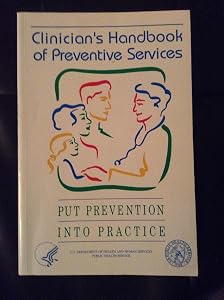
Universal Newborn Hearing Screening: Systematic Review to Update the 2001 U.S. Preventive Services Task Force Recommendation: Evidence Synthesis Number 62 by U. S. Department of Health and Human Services

Universal Newborn Hearing Screening: Systematic Review to Update the 2001 U.S. Preventive Services Task Force Recommendation: Evidence Synthesis Number 62

U. S. Department of Health and Human Services
74 pages
CreateSpace Independent Publishing Platform
Jun 2013
Paperback
Health, Mind & Body WSBN
0
Readers
0
Reviews
0
Discussions
0
Quotes
This systematic evidence review updates a prior review for the U.S. Preventive Services Task Force (USPSTF) on universal newborn hearing screening (UNHS) to detect moderate to severe permanent, bilateral congenital hearing loss (PCHL) . In 2001, based on results of a prior systematic evidence review, the USPSTF concluded that the evidence was insufficient to recommend for or against routine screening of newborns for PCHL during the postpartum hospitalization (I Recommendation) . The USPSTF provided additional specific conclusions about the evidence. They determined that methods of screening using otoacoustic emissions (OAEs) and auditory brainstem response (ABR) are highly accurate for identifying PCHL in newborns, and UNHS leads to earlier identification and treatment of infants with PCHL. They found that evidence was inconclusive regarding whether earlier treatment resulting from newborn screening leads to clinically important improvement in speech and language skills at age 3 years and beyond because existing studies had design limitations. The USPSTF considered that earlier identification and intervention may improve the quality of life during the first year of life, and prevent regret by the family over delayed diagnosis of PCHL, but limited data addressing these benefits existed. They were not able to determine whether potential benefits outweighed the potential harms of false-positive tests. This update focuses on critical evidence gaps that were unresolved at the time of the 2001 recommendation, and utilizes the format and methods of the prior systematic evidence review. The Joint Committee on Infant Hearing (JNIH) , comprised of representatives from audiology, otolaryngology, pediatrics, education, and state speech and hearing programs, provides position statements and establishes practice standards for early identification, intervention, and follow-up care for infants and young children with hearing loss. According to the JCIH, hearing screening should identify infants at risk for specifically defined hearing loss that interferes with development. The targeted hearing loss for UNHS programs is permanent sensory or conductive hearing loss averaging 30 to 40 decibels (dB) or more in the frequency region important for speech recognition (approximately 500 through 4000 Hertz [Hz]) . The focus of UNHS is on congenital as opposed to acquired or progressive hearing loss that may not be detected in the newborn period. The term "hearing impairment" is commonly used outside the U.S. instead of "hearing loss." This systematic review updates the evidence from the prior 2001 USPSTF review for the following key questions: 1. Among infants identified by UNHS who would not be identified by targeted screening, does initiating treatment prior to age 6 months improve language and communication outcomes? 2. Compared with targeted screening, does UNHS increase the chance that treatment will be initiated by age 6 months for average risk infants? For high risk infants? 3. What are the adverse effects of UNHS and early treatment?
Join the conversation

No discussions yet. Join BookLovers to start a discussion about this book!

No reviews yet. Join BookLovers to write the first review!

No quotes shared yet. Join BookLovers to share your favorite quotes!

Earn Points
Your voice matters. Every comment, review, and quote earns you reward points redeemable for Bitcoin.
Comment +5 pts Review +20 pts Quote +7 pts Upvote +1 pt
BookMatch Quiz
Find books similar to this one
About this book
Pages 74
Publisher CreateSpace Independ...
Published 2013
Readers 0