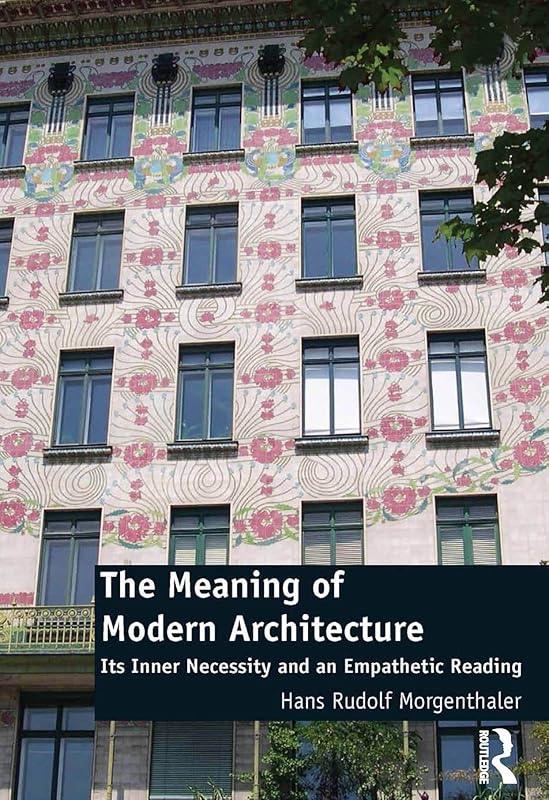
The Meaning of Modern Architecture: Its Inner Necessity and an Empathetic Reading by Hans Rudolf Morgenthaler

The Meaning of Modern Architecture: Its Inner Necessity and an Empathetic Reading

Hans Rudolf Morgenthaler
168 pages
Routledge
Mar 2016
Hardcover
Arts & Photography WSBN
0
Readers
0
Reviews
0
Discussions
0
Quotes
Using empathy, as established by the Vienna School of Art History, complemented by insights on how the mind processes visual stimuli, as demonstrated by late 19th-century psychologists and art theorists, this book puts forward an innovative interpretative method of decoding the forms and spaces of Modern buildings. This method was first developed as scholars realized that the new abstract art appearing needed to be analysed differently than the previous figurative works. Since architecture experienced a similar development in the 1920s and 30s, this book argues that the empathetic method can also be used in architectural interpretation. While most existing scholarship tends to focus on formal and functional analysis, this book proposes that Modern architecture is too diverse to be reduced to a few common formal or ornamental features. Instead, by relying on the viewer's innate psycho-physiological perceptive abilities, sensual and intuitive understandings of composition, form, and space are emphasized. These aspects are especially significant because Modern Architecture lacks the traditional stylistic signs. Including building analyses, it shows how, by visually reducing cubical forms and spaces to linear configurations, the exteriors and interiors of Modern buildings can be interpreted via human perceptive abilities as dynamic movement systems commensurate with the new industrial transportation age. This reveals an inner necessity these buildings express about themselves and their culture, rather than just an explanation of how they are assembled and how they should be used. The case studies highlight the contrasts between buildings designed by different architects, rather than concentrating on the few features that relate them to the zeitgeist. It analyses the buildings directly as the objects of study, not indirectly, as designs filtered through a philosophical or theoretical discourse. The book demonstrates that, with technology and science affecting culture
Join the conversation

No discussions yet. Join BookLovers to start a discussion about this book!

No reviews yet. Join BookLovers to write the first review!

No quotes shared yet. Join BookLovers to share your favorite quotes!

Earn Points
Your voice matters. Every comment, review, and quote earns you reward points redeemable for Bitcoin.
Comment +5 pts Review +20 pts Quote +7 pts Upvote +1 pt
BookMatch Quiz
Find books similar to this one
About this book
Pages 168
Publisher Routledge
Published 2016
Readers 0