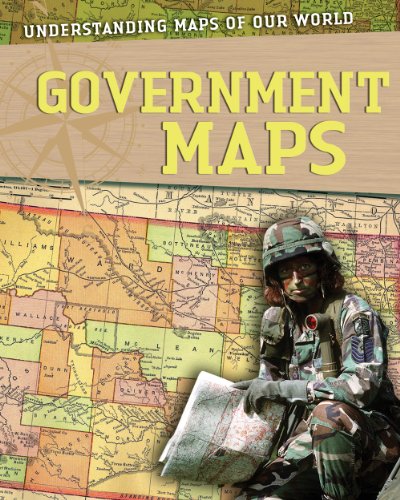
Grade 6-9–These fascinating books open with an identical whirlwind time line of cartographic history, beginning with a map of the world as 15th-century Europeans knew it and ending with the first photos of Earth taken from space. Each title includes the same introduction to the series and a paragraph that explains the need for the type of maps under discussion, and how they are used and by whom. Map- and photograph-heavy spreads then discuss the history, purposes, and creation methods of various navigation aids, and provide some background on the places they depict. Related events and topics also spring up, such as discussions of the U.S. census and of gerrymandering in the Elections and Maps part of Government. The authors' descriptions of cartographic challenges, old and new, result in a lot of valuable extras–the discussion in Cities of da Vinci's revolutionary use, in urban maps, of outlines instead of pictures for buildings, for example, and of how modern, computer-aided cartographers can use previously undreamed-of ways of showing relative building heights.