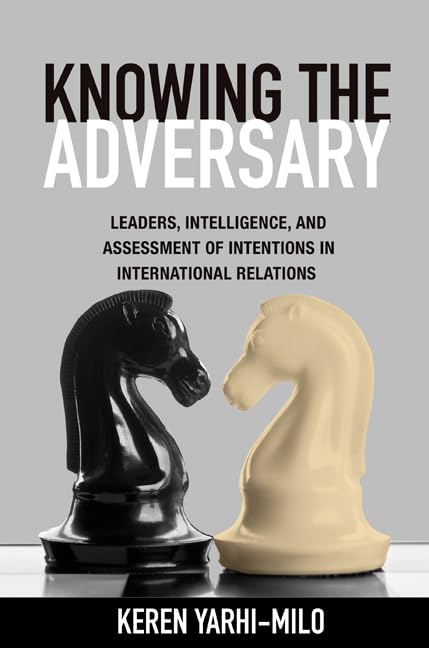
Knowing the Adversary: Leaders, Intelligence, and Assessment of Intentions in International Relations (Princeton Studies in International History and Politics, 146) by Keren Yarhi-Milo

Knowing the Adversary: Leaders, Intelligence, and Assessment of Intentions in International Relations (Princeton Studies in International History and Politics, 146)

Keren Yarhi-Milo
368 pages
Princeton University Press
Jul 2014
Paperback
Politics WSBN
0
Readers
0
Reviews
0
Discussions
0
Quotes

Free account. We’ll keep this book ready while you join.

Find a copy

Formats and availability vary by store. As an Amazon Associate I earn from qualifying purchases.

States are more likely to engage in risky and destabilizing actions such as military buildups and preemptive strikes if they believe their adversaries pose a tangible threat. Yet despite the crucial importance of this issue, we don't know enough about how states and their leaders draw inferences about their adversaries' long-term intentions. Knowing the Adversary draws on a wealth of historical archival evidence to shed new light on how world leaders and intelligence organizations actually make these assessments.. Keren Yarhi-Milo examines three cases: Britain's assessments of Nazi Germany's intentions in the 1930s, America's assessments of the Soviet Union's intentions during the Carter administration, and the Reagan administration's assessments of Soviet intentions near the end of the Cold War. She advances a new theoretical framework -- called selective attention -- that emphasizes organizational dynamics, personal diplomatic interactions, and cognitive and affective factors. Yarhi-Milo finds that decision makers don't pay as much attention to those aspects of state behavior that major theories of international politics claim they do. Instead, they tend to determine the intentions of adversaries on the basis of preexisting beliefs, theories, and personal impressions. Yarhi-Milo also shows how intelligence organizations rely on very different indicators than decision makers, focusing more on changes in the military capabilities of adversaries.. Knowing the Adversary provides a clearer picture of the historical validity of existing theories, and broadens our understanding of the important role that diplomacy plays in international security.
Join the conversation

No discussions yet. Join BookLovers to start a discussion about this book!

No reviews yet. Join BookLovers to write the first review!

No quotes shared yet. Join BookLovers to share your favorite quotes!

Earn Points
Your voice matters. Every comment, review, and quote earns you reward points redeemable for Bitcoin.
Comment +5 pts Review +20 pts Quote +7 pts Upvote +1 pt
Similar Books
Find books similar to this one
About this book
Pages 368
Publisher Princeton University...
Published 2014
Readers 0