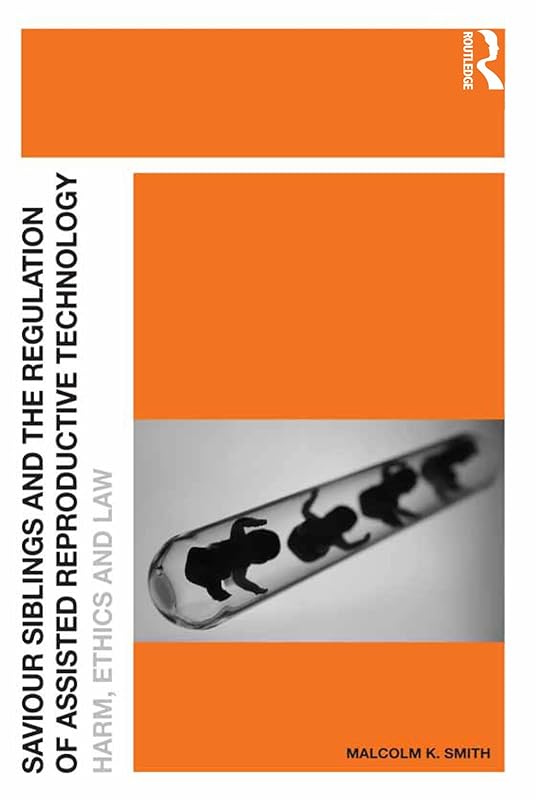
Saviour Siblings and the Regulation of Assisted Reproductive Technology: Harm, Ethics and Law by Malcolm K. Smith

Saviour Siblings and the Regulation of Assisted Reproductive Technology: Harm, Ethics and Law

Malcolm K. Smith
234 pages
Routledge
Mar 2016
Hardcover
Default WSBN
0
Readers
0
Reviews
0
Discussions
0
Quotes
Advances in the field of Assisted Reproductive Technology (ART) have been revolutionary. This book focuses on the use of ARTs in the context of families who seek to conceive a matching sibling donor as a source of tissue to treat an existing sick child. Such children have been referred to as 'saviour siblings'. Considering the legal and regulatory frameworks that impact on the accessibility of this technology in Australia and the UK, the work analyses the ethical and moral issues that arise from the use of the technology for this specific purpose. The author claims the only justification for limiting a family's reproductive liberty in this context is where the exercise of reproductive decision-making results in harm to others. It is argued that the harm principle is the underlying feature of legislative action in Western democratic society, and as such, this principle provides the grounds upon which a strong and persuasive argument is made for a less-restrictive regulatory approach in the context of 'saviour siblings'. The book will be of great relevance and interest to academics, researchers, practitioners and policy makers in the fields of law, ethics, philosophy, science and medicine.
Join the conversation

No discussions yet. Join BookLovers to start a discussion about this book!

No reviews yet. Join BookLovers to write the first review!

No quotes shared yet. Join BookLovers to share your favorite quotes!

Earn Points
Your voice matters. Every comment, review, and quote earns you reward points redeemable for Bitcoin.
Comment +5 pts Review +20 pts Quote +7 pts Upvote +1 pt
BookMatch Quiz
Find books similar to this one
About this book
Pages 234
Publisher Routledge
Published 2016
Readers 0

More by Malcolm K. Smith

View All