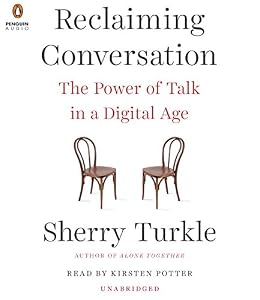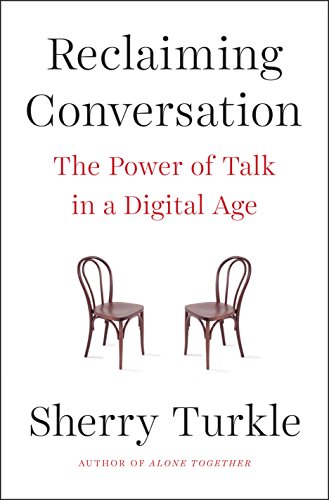
Reclaiming Conversation: The Power of Talk in a Digital Age by Sherry Turkle
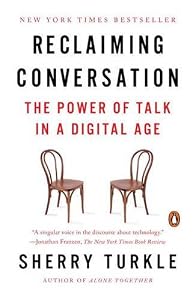
Reclaiming Conversation: The Power of Talk in a Digital Age
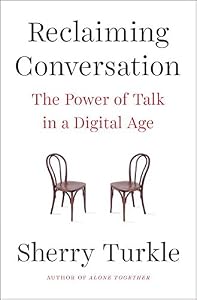
Sherry Turkle
436 pages
Penguin Press
Oct 2015
Reference WSBN
3
Readers
1
Reviews
0
Discussions
0
Quotes
<p><b><b><b>Renowned media scholar Sherry Turkle investigates how a flight from conversation undermines our relationships, creativity, and productivity</b></b></b> - <b>and why reclaiming face-to-face conversation can help us regain lost ground.</b></p><p>We live in a technological universe in which we are always communicating. And yet we have sacrificed conversation for mere connection.<br> <br> Preeminent author and researcher Sherry Turkle has been studying digital culture for over thirty years. Long an enthusiast for its possibilities, here she investigates a troubling consequence: at work, at home, in politics, and in love, we find ways around conversation, tempted by the possibilities of a text or an email in which we don't have to look, listen, or reveal ourselves. <br> <br> We develop a taste for what mere connection offers. The dinner table falls silent as children compete with phones for their parents' attention. Friends learn strategies to keep conversations going when only a few people are looking up from their phones. At work, we retreat to our screens although it is conversation at the water cooler that increases not only productivity but commitment to work. Online, we only want to share opinions that our followers will agree with - a politics that shies away from the real conflicts and solutions of the public square. <br> <br> The case for conversation begins with the necessary conversations of solitude and self-reflection. They are endangered: these days, always connected, we see loneliness as a problem that technology should solve. Afraid of being alone, we rely on other people to give us a sense of ourselves, and our capacity for empathy and relationship suffers. We see the costs of the flight from conversation everywhere: conversation is the cornerstone for democracy and in business it is good for the bottom line. In the private sphere, it builds empathy, friendship, love, learning, and productivity.<br> <br> But there is good news: we are resilient. Conversation cures. <br> <br> Based on five years of research and interviews in homes, schools, and the workplace, Turkle argues that we have come to a better understanding of where our technology can and cannot take us and that the time is right to reclaim conversation. The most human - and humanizing - thing that we do. <br> <br> The virtues of person-to-person conversation are timeless, and our most basic technology, talk, responds to our modern challenges. We have everything we need to start, we have each other. </p>
Join the conversation

No discussions yet. Join BookLovers to start a discussion about this book!

Conversation Falling Victim to the Electronic Age

As a society we have lost the ability to have an undistracted conversation, or conversation at all. Turkle carefully documents her research, providing evidence to what I see in my own life, and the lives of students and young adults in the youth and college/career ministry in which I serve. We are owned by our devices, responding to their calls like Pavlov's dogs at dinner time. The stakes are high for every segment of society. In the church, it will affect how we teach and train younger Christians. In business it affects our meetings and conversations. In medicine, how newer doctors think and treat. The good news is that there is hope and we can learn to think again, and converse again. This is a very thought provoking book with concrete action steps; steps which I have started applying in my own life. Additionally, it is a very enjoyable read and flows well. I plan on reading her earlier book, Alone Together. Read more

No quotes shared yet. Join BookLovers to share your favorite quotes!

Earn Points
Your voice matters. Every comment, review, and quote earns you reward points redeemable for Bitcoin.
Comment +5 pts Review +20 pts Quote +7 pts Upvote +1 pt
BookMatch Quiz
Find books similar to this one
About this book
Pages 436
Publisher Penguin Press
Published 2015
Readers 3