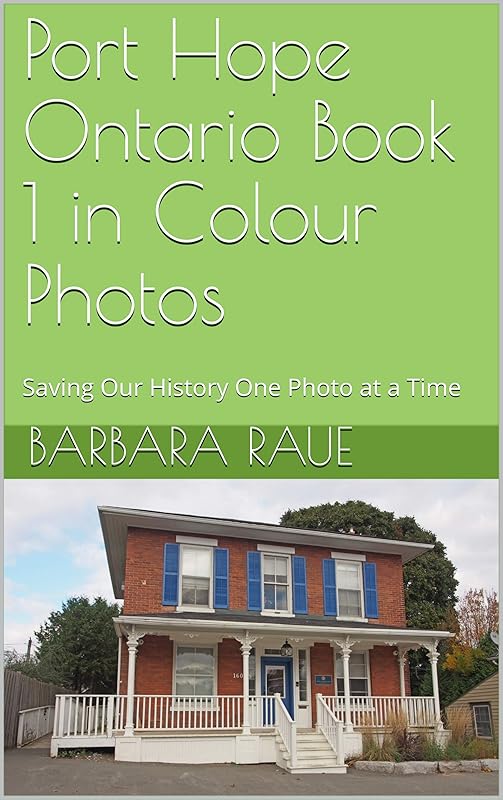
Port Hope is a heritage community situated on the north shore of Lake Ontario in Northumberland County and offers both an urban and rural paradise with the perfect combination of heritage charm, modern vibrancy and cultural allure. The Ganaraska River runs through the heart of town past historic buildings.The Township was opened in 1792 and named in honor of Colonel Henry Hope, a member of the Legislative Council of Canada.Before Canada became a nation in 1867, Port Hope was already a boomtown. Its main streets were thronged with horse-drawn carriages and farmers' wagons, its plank sidewalks crowded with shoppers and merchandise. Wood-burning locomotives pulled heavily loaded trains through town on their way to a harbor filled with schooners and steamships. Solid brick commercial blocks and houses lined the streets.The town grew rapidly from four families of English descent who arrived by boat in 1793 and settled at the river mouth. Until then the area had been home to aboriginal groups - Huron, then Iroquois, and finally Mississauga - attracted by the salmon and sturgeon that swarmed in its river.The first European settlers came from the new United States. They had chosen to follow the British crown after the American Revolution. So had Elias Smith, a Montreal merchant who, with two partners, Jonathan and Abraham Walton, financed their arrival. In return for settling forty families on the land and building a sawmill and flourmill to serve them, the partners received a grant of land roughly the size of modern urban Port Hope.More families arrived including blacksmiths, carpenters, bricklayers, and merchants. The mills drew farmers from fifty and sixty kilometers away. Grain that could not be milled was bought by distilleries - there were eventually five along the river - that produced a famous Port Hope whisky. Its most rapid growth began when railways revolutionized travel in what is now Ontario. In 1856 the Grand Trunk Railway connected Port Hope to Toronto and the Atlantic seaboard. Its viaduct over the Ganaraska River was the second greatest engineering challenge on the route, exceeded only by bridging the St. Lawrence River at Montreal.Another railway heading north from Port Hope opened up the vast timberlands and new farms of central Ontario and stretched to Peterborough and Lindsay. Eventually it reached Georgian Bay, at Midland. Down this line came great loads of timber and grain. Some went east to England, but most was exported to the USA through Rochester across the lake.Walton Street was named after Captain Jonathan Walton who brought the first settlers here. The Walton and Smith families were among the original petitioners for land grants and figured very prominently in the Town's history. Port Hopewasincorporatedasapolicevillagein1834.