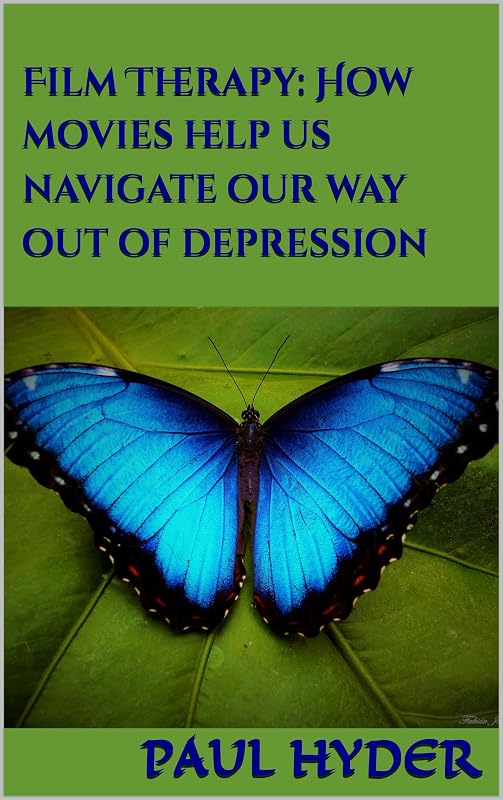
Film Therapy: How movies help us navigate our way out of depression
Paul Hyder
Paul Hyder's approach to film therapy is unique. In his book, he explores the narrative structures of 15 movies that explore loss, which Mr Hyder feels is the root cause of depression. Nearly all depression, he argues, can be traced to losing something that is valuable in your life. For example, in Chapter One, he looks at the depression a person might feel after losing their home. The movie chosen to analyse this type of loss is The Wizard of Oz (1939) , a film that tells the story of Dorothy Gale(Judy Garland) who loses her home to a tornado. Chapter Two uses the comedy Dumb and Dumber (1994) to explore how the loss of a job can lead to depression. In this movie, Jim Carrey and Jeff Daniels play a couple of dimwits who lose their jobs, but end up conquering their hopeless situation by embarking on a life-changing road journey. The other chapters explore other types of loss, including loss of status, friendship, love, meaning, direction, inspiration, identity, health, freedom and choice. Loss is usually the catalyst that triggers depression. In Papillon (1973) , a film that Mr Hyder uses to explore the loss of freedom, a convicted criminal is sent to French Guiana to serve a life sentence for killing a pimp. This, of course, is a very depressing prospect. However, for Papillon, being incarcerated only increases his yearning for freedom. He never stops believing that he will be free one day. During the movie, he tries to escape on numerous occasions, but is always caught and thrown into solitary confinement. Finally, he ends up in old age confined on Devil's Island, which no convict has ever escaped from. Papillon, however, bends his mind to the task of escape, and eventually comes up with an answer: He uses a bag of coconuts as a makeshift raft and floats across the sea to Venezuela and to freedom. Papillon's journey can be an inspiration for depressed people, who see themselves 'incarcerated' by their illness. Mr Hyder believes in happy endings. All of the movies that he has chosen to highlight in his book end on a happy note. Most of the films he chooses to analyse contain what he calls a "dialectical narrative" that begin with harmony, until some outside force or event upsets this harmony, leading to loss. The remainder of the movie is the story of the main character(s) dealing with the loss and attempting to reinstate a new, better harmony. Thus, in the Wizard of Oz, Dorothy's loss of home leads to her dangerous adventure in Oz and a visit to the Emerald City to find answers from the Wizard. She gets her answers and returns home with a new appreciation for her family and friends that she has missed so much. Being away from home in Oz has taught her that "there is no place like home" in Kansas. Mr Hyder champions the movies of the classical era, when the enforced idealism of the Hays Code encouraged happy endings and an optimism that is sadly lacking in many of the movies today. He believes that the original Hollywood dream, manufactured by a handful of Jewish movie moguls, was a beautiful and powerful dream that made Americans happy and confident. American movies with happy endings and Shirley Temple dreams enabled ordinary Americans to endure the Great Depression of the 1930's. These same movies can also help those suffering from depression realise that there is still hope "somewhere over the rainbow, way up high . . ."