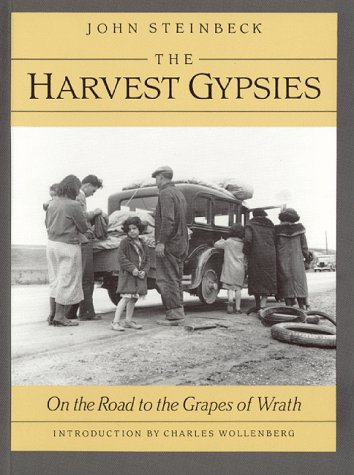



The Harvest Gypsies: On the Road to the Grapes of Wrath by John Steinbeck

The Harvest Gypsies: On the Road to the Grapes of Wrath

John Steinbeck
62 pages
Heyday Books
Nov 1988
History WSBN
3
Readers
1
Reviews
0
Discussions
0
Quotes
Recently listed in the Top 100 List of the Century's Best American Journalism <p>Gathered in this important volume are seven newspaper articles on migrant farm workers that John Steinbeck wrote for &quot;The San Francisco News&quot; in 1936, three years before _The Grapes of Wrath_. With the inquisitiveness of an investigative reporter and the emotional power of a novelist in his prime, Steinbeck toured the squatters' camps and Hoovervilles of California. Here he found once strong, independent farmers - the backbone of rural America - so reduced in dignity, beaten in spirit, sick, sullen, and defeated that they had been &quot;cast down to a kind of subhumanity.&quot; He contrasts their misery with the hope offered by government resettlement camps, where self-help committees, child nurseries, quilting and sewing projects, and decent sanitation were restoring dignity and indeed saving lives. </p><p>_The Harvest Gypsies_ gives us an eyewitness account of the horrendous Dust Bowl migration, a major event in California history, and provides the factual foundation for Steinbeck's masterpiece, _The Grapes of Wrath_. Included are twenty-two photographs by Dorothea Lange and others, many of which accompanied Steinbeck's original articles.</p>

No discussions yet. Join BookLovers to start a discussion about this book!

Steinbeck’s news previews of migrant life in 1930s California preceded novel Grapes of Wrath

95 highlights (Private) Fascinating collection of articles about Okies and migrant workers in California in the early 1930s written by Steinbeck for the San Francisco News. He gathered information about migrant workers, their work, their camps, and the much well run federal government camps where they lived. Steinbeck used much of what he learned writing these articles as background for his PULITZER prize winning novel Grapes of Wrath (1939). The lengthy introduction by Charles Wollenberg provides historical context for the articles. Well worth reading. Read more

No quotes shared yet. Join BookLovers to share your favorite quotes!