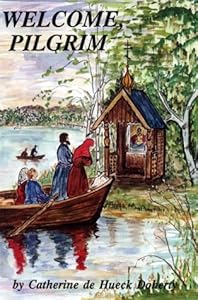
My Russian Yesterdays
Catherine De Hueck Doherty
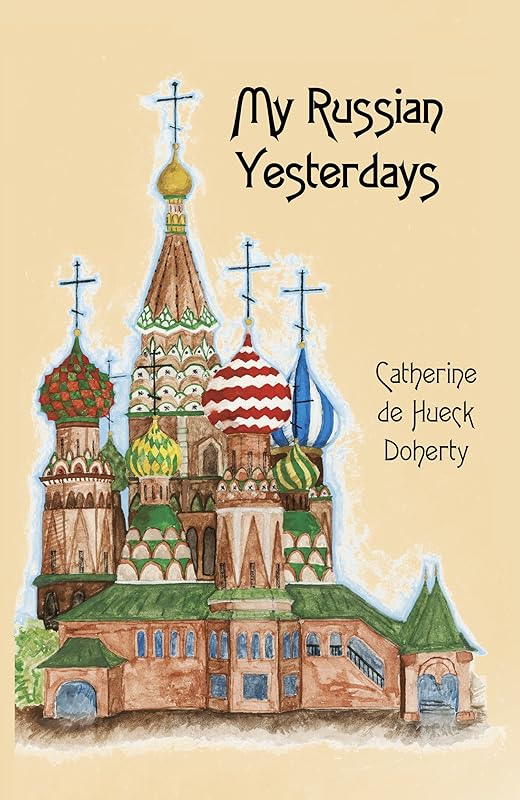
Will the faith of Holy Russia help renew the faith of the West? Catherine Doherty's zeal for bringing people to Christ led her to write about the Christian customs of the Russia of her childhood in a way that feeds our faith. The faith of Old Russia endured through the Revolution and the Communist era and still endures today. My Russian Yesterdays is a book of the ordinary Russian people and of the solid, simple, yet abiding faith which was the joy and inspiration of their life. Is this the sort of example which will lead us to Gods peace and order in the midst of our modern, complex, and fear-burdened world? Read more Continue reading Read less REVIEW
No Catholic will want to miss this adventure in true Christian living. --Catholic Home Journal --This text refers to an out of print or unavailable edition of this title. ABOUT THE AUTHOR
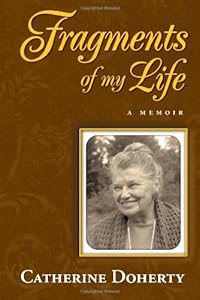
Catherine de Hueck Doherty was born in Russia on August 15, 1896. Her parents, Theodore and Emma Kolyschkine, who belonged to the minor nobility, were devout members of the Orthodox Church and had their child baptized in St. Petersburg on September 15. Schooled abroad because of her fathers job, she and her family returned to St. Petersburg in 1910, where she was enrolled in the prestigious Princess Obolensky Academy. In 1912, aged 15, she made what turned out to be a disastrous marriage with her first cousin, Boris de Hueck.
At the outbreak of World War I, Catherine became a Red Cross nurse at the front, experiencing the horrors of battle firsthand. On her return to St. Petersburg, she and Boris barely escaped the turmoil of the Russian Revolution with their lives, nearly starving to death as refugees in Finland. Together they made their way to England, where Catherine was received into the Catholic Church on November 27, 1919.
Emigrating to Canada with Boris, Catherine gave birth to their only child, George, in Toronto in 1921. Soon she and Boris became more and more painfully estranged from one another, as he pursued extramarital affairs. To make ends meet, Catherine took various jobs and eventually became a lecturer, travelling a circuit that took her across North America.
Prosperous now, but deeply dissatisfied with a life of material comfort, her marriage in ruins, she began to feel the promptings of a deeper call through a passage that leaped to her eyes every time she opened the Scriptures: Arise, go... sell all you possess... take up your cross and follow me. Consulting with various priests and the bishop of the diocese, she began her lay apostolate among the poor in Toronto in the early 1930s, calling it Friendship House.
Because her approach was so different from what was being done at the time, she encountered much persecution and resistance, and Friendship House was forced to close in 1936. Catherine then went to Europe and spent a year investigating Catholic Action. On her return, she was given the chance to revive Friendship House in New York City among the poor in Harlem. After that she was invited to open another Friendship House in Chicago.
In 1943, having received an annulment of her first marriage, she married Eddie Doherty, one of Americas foremost reporters, who had fallen in love with her while writing a story about her apostolate.
Meanwhile, serious disagreements had arisen between the staff of Friendship House and its foundress. When these could not be resolved, Catherine and Eddie moved to Combermere, Ontario, Canada on May 17, 1947, naming their new rural apostolate Madonna House. This was to be the seedbed of an apostolate that now numbers more than 200 staff workers and over 125 associate priests, deacons, and bishops, with 22 field-houses throughout the world.
Catherine Doherty died on December 14, 1985 in Combermere at the age of 89. Since then, the cause for Catherine's canonization has been officially opened by the Catholic Church.
--This text refers to an out of print or unavailable edition of this title. Read more Continue reading Read less