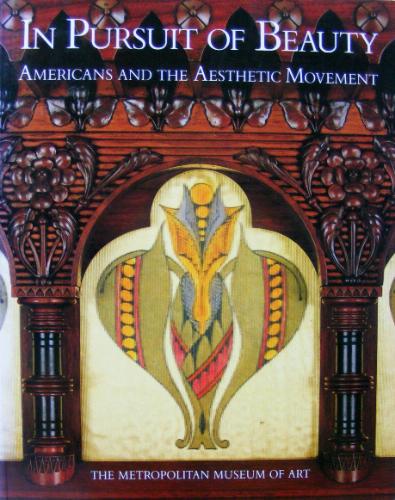
Enjoying its heydey from the mid-1870s to the mid-1880s, the American esthetic movement put forth "art for art's sake" as a counterbalance to materialism. The experimental spirit that set Whistler's nocturnes ablaze also spurred Louis Tiffany's abstract patterning of colors and shapes in domestic interiors. Embroiderers who wielded their needles much as painters did their brushes created ambitious wall hangings and crazy quilts. In architecture, the search for a vernacular led to a colonial revival. Some designers turned to exotic influences, for example, landscape painter Frederic Church, whose summer home, Olana, juxtaposed Moorish, Romanesque and Buddhist elements. Heated debates raged about what constituted artful surface ornament in textiles, carpets and wallpaper.