The Confession of Dorothy Danner: Telling a Life Story
Richard A. Pride
288 pages
Vanderbilt University Press
Oct 1995
Hardcover
Spanish
WSBN
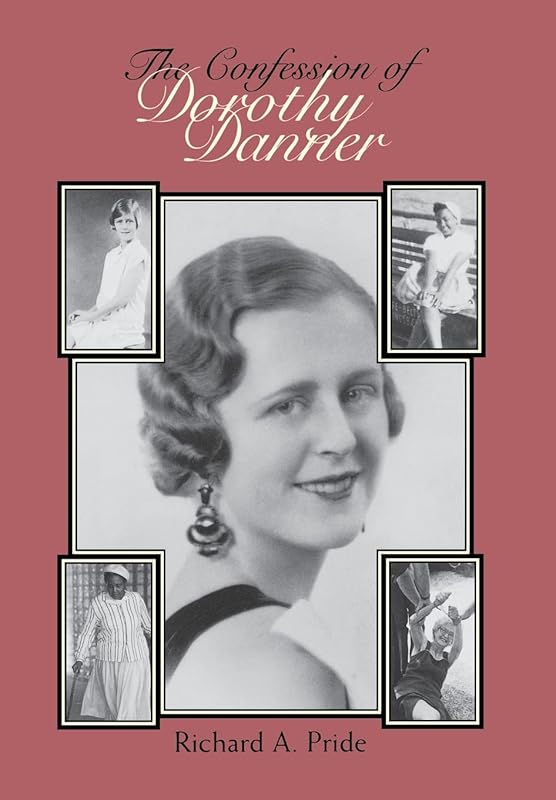
An intriguing blend of biography, oral history, sociology, and politics that stretches the boundaries of each category to examine one particular story of the South during the Civil Rights era. What does it mean to tell a life story? Can it truly be done? Is there a single version of "truth" to be told about a person's life? In this complex and fascinating book, Dorothy Danner of Mobile, Alabama, emerges as an intriguing example of Sartre's "universal singular." Born into a wealthy and well-established Southern family, she bears and reflects many of the marks of her gender, social place, and historical moment. Struggling through adolescence, after her mother's early death, with what she perceived as emotional abandonment by a distant father, Danner acted out a social script involving servants and private schools in the South, an elite Northern college, and extensive travel abroad. She departed, however, from her expected role by engaging in psychoanalysis, explorations of sexual identity, too much liquor and some experimentation with drugs, as well as multiple marriages and the somewhat mysterious suicide of her first husband. Danner further stepped outside the boundaries and expectations of her social world by throwing herself wholeheartedly into idealistic and controversial causes, including world peace, animal rights and, perhaps most prominently, the Civil Rights movement. In the early 1950s, she took into her home as a foster daughter a young African-American girl (whose name was changed from Carrie Mae to Caroline) and began raising the girl in privileged circumstances, including two years of travel and schooling in Europe. After returning to Mobile, Danner attempted unsuccessfully to use the child as a battering ram to break down Alabama's segregation laws, provoking the wrath of the Ku Klux Klan. Soon afterwards, Danner moved her household to the first of several predominantly African-American neighborhoods in which she lived until very recently.These and other of Dorothy's actions embarrassed and alienated her white, upper-class friends and distanced her from her father, her husbands, and eventually, her foster daughter. Things did not turn out as Danner ostensibly intended, and her telling "confession" reveals why.In reconstructing this story of a complex and often frustrated woman, Richard Pride combines careful historical and social science scholarship, extensive oral interviews, and current critical theory on understanding and effectively conveying the meaning of a human life. He has created a work that is reminiscent of Janet Malcolm's The Silent Woman: Sylvia Plath and Ted Hughes and Ian Hamilton's In Search of J. D. Salinger. The voices and perspectives of Dorothy Danner herself, of her estranged daughter Caroline, of Caroline's perceptive ex-husband, of Dorothy's more orthodox cousin, and (through a series of surprisingly devoted letters) of Dorothy's father, combine with Pride's own sensitive vision of events and personalities to form a portrait of a woman who both transcended and was a victim of her times and her own limitations.