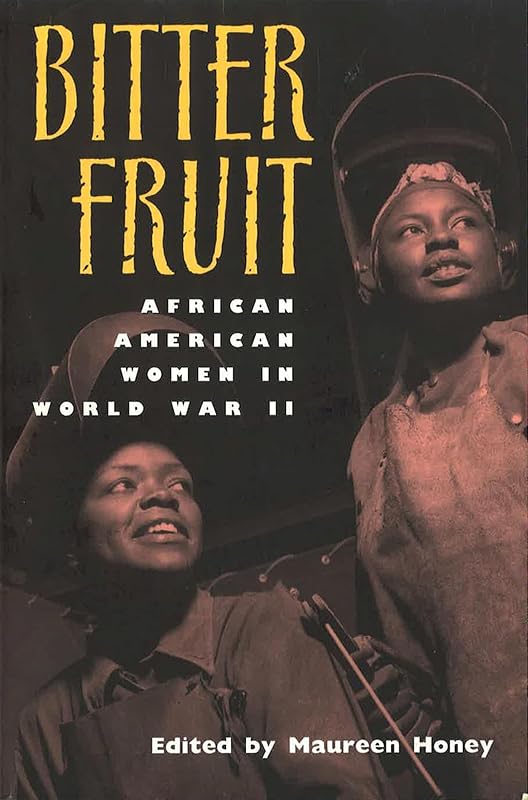
Bitter Fruit: African American Women in World War II (Volume 1) by Maureen Honey

Bitter Fruit: African American Women in World War II (Volume 1)

Maureen Honey
424 pages
University of Missouri
Nov 1999
Paperback
History WSBN
0
Readers
0
Reviews
0
Discussions
0
Quotes
Despite the participation of African American women in all aspects of home-front activity during World War II, advertisements, recruitment posters, and newsreels portrayed largely white women as army nurses, defense plant workers, concerned mothers, and steadfast wives. This sea of white faces left for posterity images such as Rosie the Riveter, obscuring the contributions that African American women made to the war effort. In Bitter Fruit, Maureen Honey corrects this distorted picture of women's roles in World War II by collecting photos, essays, fiction, and poetry by and about black women from the four leading African American periodicals of the war period: Negro Digest, The Crisis, Opportunity, and Negro Story.Mostly appearing for the first time since their original publication, the materials in Bitter Fruit feature black women operating technical machinery, working in army uniforms, entertaining audiences, and pursuing a college education. The articles praise the women's accomplishments as pioneers working toward racial equality; the fiction and poetry depict female characters in roles other than domestic servants and give voice to the bitterness arising from discrimination that many women felt. With these various images, Honey masterfully presents the roots of the postwar civil rights movement and the leading roles black women played in it.Containing works from eighty writers, this anthology includes forty African American women authors, most of whose work has not been published since the war. Of particular note are poems and short stories anthologized for the first time, including Ann Petry's first story, Octavia Wynbush's last work of fiction, and three poems by Harlem Renaissance writer Georgia Douglas Johnson. Uniting these various writers was their desire to write in the midst of a worldwide military conflict with dramatic potential for ending segregation and opening doors for women at home.Traditional anthologies of African American literature jump from the Harlem Renaissance to the 1960s with little or no reference to the decades between those periods. Bitter Fruit not only illuminates the literature of these decades but also presents an image of black women as community activists that undercuts gender stereotypes of the era. As Honey concludes in her introduction, "African American women found an empowered voice during the war, one that anticipates the fruit of their wartime effort to break silence, to challenge limits, and to change forever the terms of their lives."
Join the conversation

No discussions yet. Join BookLovers to start a discussion about this book!

No reviews yet. Join BookLovers to write the first review!

No quotes shared yet. Join BookLovers to share your favorite quotes!

Earn Points
Your voice matters. Every comment, review, and quote earns you reward points redeemable for Bitcoin.
Comment +5 pts Review +20 pts Quote +7 pts Upvote +1 pt
BookMatch Quiz
Find books similar to this one
About this book
Pages 424
Publisher University of Missou...
Published 1999
Readers 0