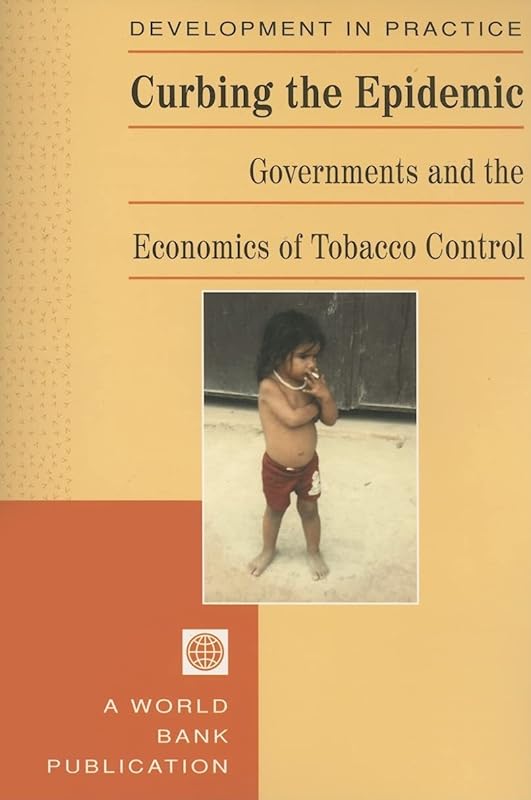
Curbing the Epidemic: Governments and the Economics of Tobacco Control (Development in Practice) by World Bank

Curbing the Epidemic: Governments and the Economics of Tobacco Control (Development in Practice)

World Bank
136 pages
World Bank Publications
Jun 1999
Paperback
Health, Mind & Body WSBN
0
Readers
0
Reviews
0
Discussions
0
Quotes
'The World Bank comprehensively dismisses the arguments of the tobacco industry that tobacco control measures impair freedom of choice.' - The Financial Times, May 18, 1999 Smoking already kills 1 in 10 adults worldwide. Until recently, the epidemic and chronic disease caused by smoking mainly affected rich nations but it is now rapidly shifting to the developing world. Few people will dispute that smoking is damaging health on a global scale. However, many governments have taken little economic action to control smoking (higher taxes, comprehensive bans on advertising, or restrictions on smoking in public places) due to concerns that interventions would have harmful economic consequences. 'Curbing the Epidemic' addresses important economic and social issues that confront policymakers when dealing with tobacco control policies and their impact on economies. The economic aspects of tobacco control are critical since the production and consumption of tobacco have a strong impact on the social and economic resources of both developed and developing countries. The report: * Assesses the expected consequences of tobacco control for health * Assesses the consequences for economies and individuals * Demonstrates that the economic fears that have deterred policymakers from taking action are largely unfounded. It is believed with current smoking patterns, about 500 million people alive today will eventually be killed by tobacco use. By 2030, the report states that tobacco is expected to be the single biggest cause of death worldwide, accounting for about 10 million deaths per year. In light of the rising death toll from tobacco use, this report is also very timely. It draws on many productive collaborations that have arisen among governments, NGOs, and agencies within the United Nations system (UNICEF, the Food and Agricultural Organization and the International Monetary Fund) .
Join the conversation

No discussions yet. Join BookLovers to start a discussion about this book!

No reviews yet. Join BookLovers to write the first review!

No quotes shared yet. Join BookLovers to share your favorite quotes!

Earn Points
Your voice matters. Every comment, review, and quote earns you reward points redeemable for Bitcoin.
Comment +5 pts Review +20 pts Quote +7 pts Upvote +1 pt
BookMatch Quiz
Find books similar to this one
About this book
Pages 136
Publisher World Bank Publicati...
Published 1999
Readers 0