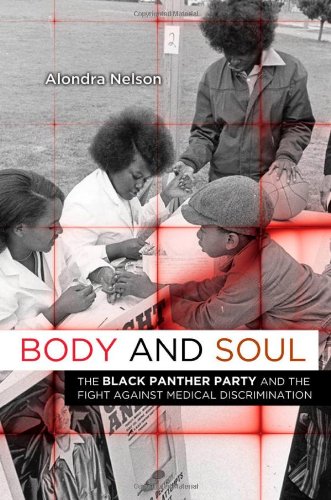
2013 MIRRA KOMAROVSKY BOOK AWARD2012 LETITIA WOODS BROWN MEMORIAL BOOK AWARD2012 DISTINGUISHED CONTRIBUTION TO SCHOLARSHIP BOOK AWARD(AMERICAN SOCIOLOGICAL ASSOC: RACE, GENDER, AND CLASS SECTION) 2012 ASSOCIATION FOR HUMANIST SOCIOLOGY BOOK AWARD2012 C. WRIGHT MILLS AWARD (FINALIST)Between its founding in 1966 and its formal end in 1980, the Black Panther Party blazed a distinctive trail in American political culture. The Black Panthers are most often remembered for their revolutionary rhetoric and militant action. Here Alondra Nelson deftly recovers an indispensable but lesser-known aspect of the organization's broader struggle for social justice: health care. The Black Panther Party's health activism--its network of free health clinics, its campaign to raise awareness about genetic disease, and its challenges to medical discrimination--was an expression of its founding political philosophy and also a recognition that poor blacks were both underserved by mainstream medicine and overexposed to its harms.