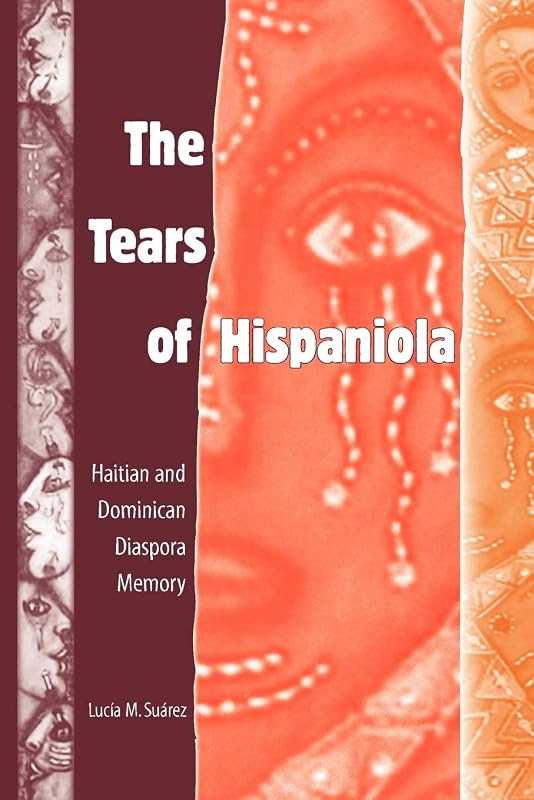
The Tears of Hispaniola: Haitian and Dominican Diaspora Memory (New World Diasporas) by Lucía M. Suárez

The Tears of Hispaniola: Haitian and Dominican Diaspora Memory (New World Diasporas)

Lucía M. Suárez
224 pages
University Press of Florida
Feb 2006
Paperback
History WSBN
0
Readers
0
Reviews
0
Discussions
0
Quotes

Free account. We’ll keep this book ready while you join.

Find a copy

Formats and availability vary by store. As an Amazon Associate I earn from qualifying purchases.

"The first book on the market that considers the experience of Haitians and Dominicans in the United States in one single effort of analysis and does so through the cultural venue of literary texts produced by writers from the two communities."--Silvio Torres-Saillant, Syracuse University"A new understanding of the island of Hispaniola. . . . [This] work brings to the fore a most neglected aspect of Caribbean history--the close links between two nations, Haiti and the Dominican Republic, who are perceived as enemies but whose peoples have shared similar histories of violence and pain."--Lizabeth Paravisini-Gebert, Vassar CollegeThe Tears of Hispaniola appraises the ways in which Haitian and Dominican diaspora writings serve as public record--documenting violence, terror, memory, and human rights violations on the island of Hispaniola, home to the two nations of Haiti and the Dominican Republic. Lucía Suárez offers a thorough and delicately nuanced reading of central works by Jean-Robert Cadet, Junot Díaz, Loida Maritza Pérez, and Edwidge Danticat, to establish the function of this literature as a socio-literary catalyst, and to bring attention to the larger injustices still occurring on the island.Stories of a "torn country" continue to haunt the people of Hispaniola's diaspora. In their images of what they left behind and what exists today, these writers engage in a process Suárez contends can transform unspeakable truths into memoirs of survival, understanding, and resistance. She argues that as authors and intellectuals articulate traumatic memories of their homeland, and expose the intersections of new violations in their host country, their writing creates a venue to transcend violence and claim justice.Of particular importance is how Suárez interprets these texts as a platform from which to consider questions of ethnic identity and social reform for the large and growing U.S.-Caribbean community. The author suggests that citizens of the diaspora challenge prejudices and make a distinct impact on the cultural landscape of the United States.This is a pioneering book that offers a compassionate and constructive, comparative analysis of the literatures and societies that have emerged from Haitian and Dominican dispersion to the United States. It thus offers a critical and highly important lens toward the understanding of the links between literature, history, and memory. The Tears of Hispaniola boldly reframes Caribbean and diaspora literature in terms of a new pan-Caribbean diasporic canon in the Americas..
Join the conversation

No discussions yet. Join BookLovers to start a discussion about this book!

No reviews yet. Join BookLovers to write the first review!

No quotes shared yet. Join BookLovers to share your favorite quotes!

Earn Points
Your voice matters. Every comment, review, and quote earns you reward points redeemable for Bitcoin.
Comment +5 pts Review +20 pts Quote +7 pts Upvote +1 pt
Similar Books
Find books similar to this one
About this book
Pages 224
Publisher University Press of...
Published 2006
Readers 0