Home/Books/History/
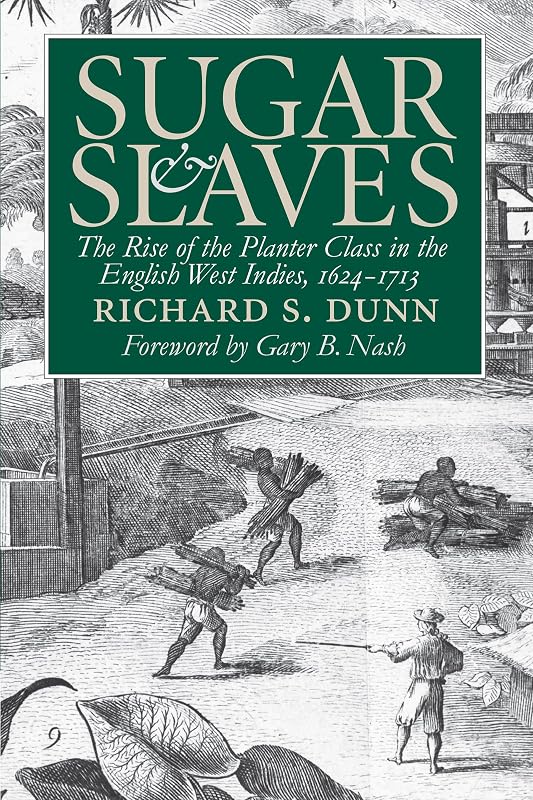
Sugar and Slaves: The Rise of the Planter Class in the English West Indies, 1624-1713 (Published by the Omohundro Institute of Early American History ... and the University of North Carolina Press)
Sugar and Slaves: The Rise of the Planter Class in the English West Indies, 1624-1713 (Published by the Omohundro Institute of Early American History ... and the University of North Carolina Press)
First published by UNC Press in 1972, Sugar and Slaves presents a vivid portrait of English life in the Caribbean more than three centuries ago. Using a host of contemporary primary sources, Richard Dunn traces the development of plantation slave society in the region. He examines sugar production techniques, the vicious character of the slave trade, the problems of adapting English ways to the tropics, and the appalling mortality rates for both blacks and whites that made these colonies the richest, but in human terms the least successful, in English America.
"A masterly analysis of the Caribbean plantation slave society, its lifestyles, ethnic relations, afflictions, and peculiarities.--Journal of Modern History
"A remarkable account of the rise of the planter class in the West Indies. . . . Dunn's [work] is rich social history, based on factual data brought to life by his use of contemporary narrative accounts.--New York Review of Books
"A study of major importance. . . . Dunn not only provides the most solid and precise account ever written of the social development of the British West Indies down to 1713, he also challenges some traditional historical cliches.--American Historical Review
Read more Continue reading Read less REVIEW
ÝThis¨ elegantly written book is easily the finest on the subject and a major addition to colonial scholarship."Journal of Economic History"
A masterly analysis of the Caribbean plantation slave society, its lifestyles, ethnic relations, afflictions, and peculiarities.
"Journal of Modern History"
Dunn's is rich social history, based on factual data brought to life by his use of contemporary narrative accounts.
Willie Lee Rose, "New York Review of Books"
Professor Dunn has written an excellent book: not only is it informative, it is also readable.
"Business History Review"
"A masterly analysis of the Caribbean plantation slave society, its lifestyles, ethnic relations, afflictions, and peculiarities.
"Journal of Modern History""
"Dunn's is rich social history, based on factual data brought to life by his use of contemporary narrative accounts.
Willie Lee Rose, "New York Review of Books""
"Professor Dunn has written an excellent book: not only is it informative, it is also readable.
"Business History Review""
[This] elegantly written book is easily the finest on the subject and a major addition to colonial scholarship.
"Journal of Economic History"
Dunn's work is a model of contemporary historical research. He writes with admirable clarity.
"London Financial Times"
REVIEW
A study of major importance: the first systematic and extended account of the emergence and character of an elite group for any of the English colonies during the seventeenth and eighteenth centuries. . . . Dunn not only provides the most solid and precise account ever written of the social development of the British West Indies down to 1713, he also challenges some traditional historical cliches.--Jack P. Greene, American Historical Review
FROM THE INSIDE FLAP
Drawing upon such sources as travelers' accounts, plantation records, census returns, wills, inventories, land patents, maps, and parish registers, Richard Dunn presents a composite portrait of plantation life in the Caribbean three centuries ago. FROM THE BACK COVER
Drawing upon such sources as travelers' accounts, plantation records, census returns, wills, inventories, land patents, maps, and parish registers, Richard Dunn presents a composite portrait of plantation life in the Caribbean three centuries ago. ABOUT THE AUTHOR
Richard S. Dunn is director of the McNeil Center for Early American Studies at the University of Pennsylvania. Read more Continue reading Read less