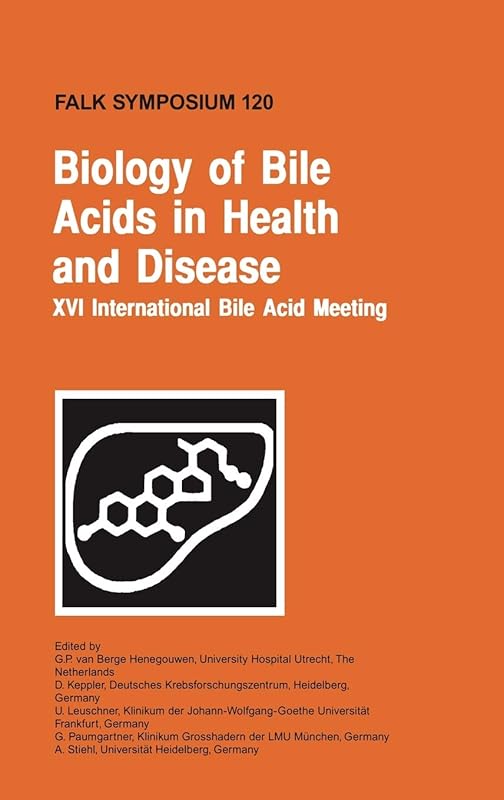
Biology of Bile Acids in Health and Disease - XVI International Bile Acid Meeting (Falk Symposium, Volume 120) (Falk Symposium, 120) by G.P. van Berge Henegouwen

Biology of Bile Acids in Health and Disease - XVI International Bile Acid Meeting (Falk Symposium, Volume 120) (Falk Symposium, 120)

G.P. van Berge Henegouwen
368 pages
Springer
May 2001
Hardcover
Health, Mind & Body WSBN
0
Readers
0
Reviews
0
Discussions
0
Quotes
Beginning in 1970, the International Bile Acid Meeting has taken place every two years and each time new progress in our understanding of the complex role of bile acids in many metabolic processes of the liver and the intestine has been revealed by a selected group of leading scientists from all over the world. Although originally mainly physiological data on bile acid synthesis and transport were emphasized, and later on also the therapeutic benefit of bile acids in gallstone disease and cholestasis was discovered, we have come now to the molecular biology and genetic era with major discoveries in transport defects and related diseases. This book is the proceedings of Falk Symposium No. 120, held in The Hague, The Netherlands, on October 12-13, 2000 - the 16th International Bile Acid Meeting. One of the main discoveries recently has been the identification of nuclear receptors for bile acids, which gives them a much broader perspective than previously anticipated. It even suggests that bile acids can regulate their biosynthesis and enterohepatic circulation transcriptionally. It will therefore not be surprising that this topic, together with the molecular regulation of cholesterol 7alpha-hydroxylase and cholesterol homeostasis, has a dominant place in these proceedings. Another important topic is the progress in our molecular understanding of hepatic (both at the basolateral and canalicular sites) , cholangiocytic and intestinal bile acid transport processes. Further insights into genetic defects causing cholestasis or intestinal malabsorption in animal models and in human diseases are also discussed by a number of well-known authors. Finally the last section deals with new findings on the role of bile acid therapy in cholestatic syndromes or chemoprevention and with the potential benefit of bile acid inhibitors. All contributors provide an update on the most recent developments in their field.
Join the conversation

No discussions yet. Join BookLovers to start a discussion about this book!

No reviews yet. Join BookLovers to write the first review!

No quotes shared yet. Join BookLovers to share your favorite quotes!

Earn Points
Your voice matters. Every comment, review, and quote earns you reward points redeemable for Bitcoin.
Comment +5 pts Review +20 pts Quote +7 pts Upvote +1 pt
BookMatch Quiz
Find books similar to this one
About this book
Pages 368
Publisher Springer
Published 2001
Readers 0