This 4-vol. set illustrates the importance of scientific and mathematical principles through their use in everyday life. Each volume focuses on a specific scientific discipline -- biology, chemistry, earth sciences and physics -- offering students an in-depth understanding of each discipline and its theories. Creating a sense of real-life relevance for students, the Science of Everyday Things expands on the explanations of scientific principles and concepts using a straightforward, step-by-step approach, and presents theories in their everyday applications. Some of the entries covered include: how osmosis is used in dehydrating fruit; how the principles of aerodynamics are applied to cars; Charles law and the chemical reaction that sets off an airbag; how algorithms are used to figure out the NCAA playoff tournaments; and more. Each volume the Science of Everyday Things presents approximately 40-50 entries and includes photos, diagrams, sidebars containing short glossaries and interesting facts and details relating to each principle.
Read more Continue reading Read less FROM BOOKLIST
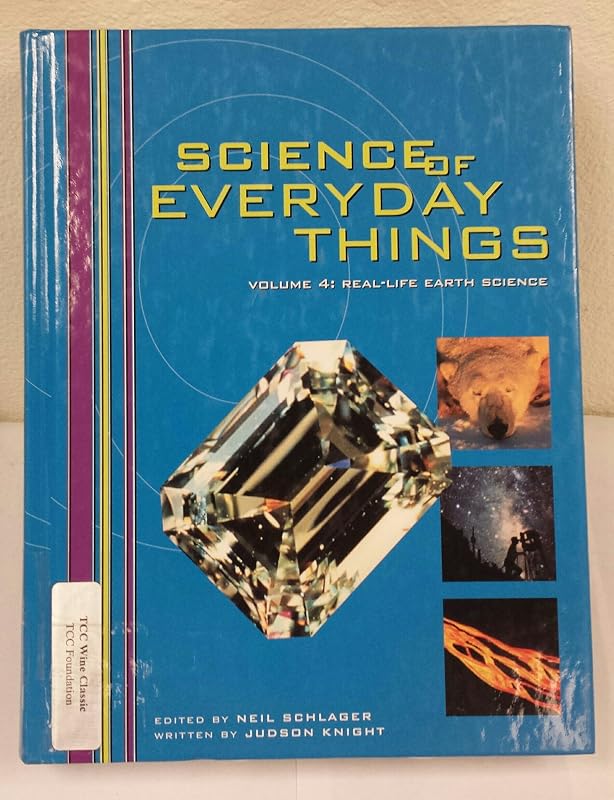
The first two volumes of this series are Real-Life Chemistry and Real-Life Physics, released in 2001. The purpose of the series is to explain scientific phenomena using common real-world examples. Real-Life Earth Science has about 40 entries covering various scientific phenomena and principles. Information in each entry includes "Concept" (defines the scientific principle or theory) , "How It Works," "Real-Life Applications," and "Where to Learn More." A "Key Terms" section defines terms from the text. Examples of topics include study of the earth, geology, geomorphology, soil science, geochemistry, and meteorology. Under "Real-Life Applications" we can learn about the greenhouse effect (under Ecosystems and ecology) ; mass extinction (under Paleontology) ; and the 1812 New Madrid, Missouri, earthquake (under Seismology) .Entries, written at a level accessible to high-school students and the general reader, average about 10 pages in length. The "Where to Learn More" section provides about 10 books and Web sites for further information. Black-and-white line drawings and photographs supplement the text. There are no color illustrations. An index offers subject access to the contents of the volume; in addition, there is a cumulative subject index of all 4 volumes. The basic facts provided in these books are available elsewhere, but the "Real-Life Applications" may be interesting to some. Recommended for high-school and public libraries. RBB
Copyright American Library Association. All rights reserved