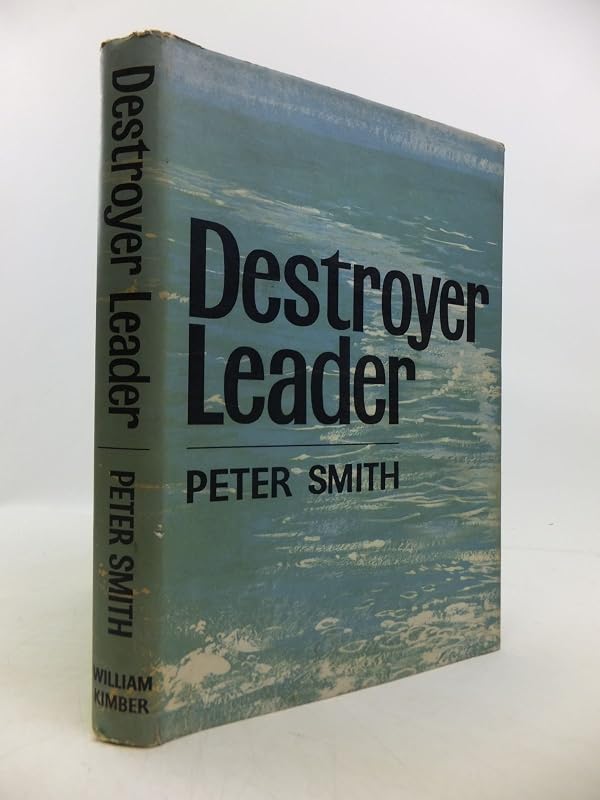
Destroyer leader: The story of H.M.S. Faulknor by Peter Charles Smith

Destroyer leader: The story of H.M.S. Faulknor

Peter Charles Smith
191 pages
Kimber
Jan 1968
Hardcover
Default WSBN
0
Readers
0
Reviews
0
Discussions
0
Quotes
HMS Faulknor was an F Class destroyer, built as a 'leader' or command-ship, of a flotilla of 8 destroyers. Launched in 1934, she was to survive World War II and see action in many of the Royal Navy's most famous operations. The book gives a detailed account of the ship's history from its conception to its demise at the hands of the scrap yard. Faulknor was one of the first ships into action and sank the first U Boat of the conflict. During the defence of Norway Faulknor and her flotilla were in the midst of the action, delving into Fiords to seek out the enemy and providing cover or transport to embark and then disembark the British forces. The ship joined Force H, based in Gibraltar, in June 1941. The Navy was fighting the Italian and Vichy French fleets and soon encountered the alarming power of the Luftwaffe. Their task was to secure the Gibraltar Strait and to protect vital Allied convoys on passage to Malta or North Africa where the fighting was at that time fierce.During 1941 this well-travelled ship was still sailing in the Mediterranean but also patrolling in the Bay of Biscay in foul weather to enforce the blockade on the German warships Scharnhorst and Gneisenau laying in Brest. During her last months in the area Faulknor was engaged in convoy protection to keep the vital supply lines open to the Desert Army and the besieged island of Malta. September 1941 saw a dramatic change in the environment that Faulknor was fighting her sea war. From the warm climbs of Gibraltar she was hurled into the wilds of the North East Atlantic and the Arctic Sea. Here the danger was not just the enemy attacking by sea and air, but also the severity of icy gales and blizzards as the Royal Navy nurtured conveys of vital equipment to Britain's new ally, Russia. In June 1943 Faulknor sailed south again, this time for the invasion of Sicily, 'Operation Husky'. Following the successful invasion she remained in the Mediterranean until May 1944 seeing action in the Aegean and at the Anzio landings.From June 1944 Fauklnor played a key role in 'Operation Neptune' now known as D-Day. After the success of the landings Faulknor sailed mainly in the English Channel and Western Approaches acting as anti-submarine escort to the many large troop-carrying liners that were arriving and leaving for the USA.
Join the conversation

No discussions yet. Join BookLovers to start a discussion about this book!

No reviews yet. Join BookLovers to write the first review!

No quotes shared yet. Join BookLovers to share your favorite quotes!

Earn Points
Your voice matters. Every comment, review, and quote earns you reward points redeemable for Bitcoin.
Comment +5 pts Review +20 pts Quote +7 pts Upvote +1 pt
BookMatch Quiz
Find books similar to this one
About this book
Pages 191
Publisher Kimber
Published 1968
Readers 0