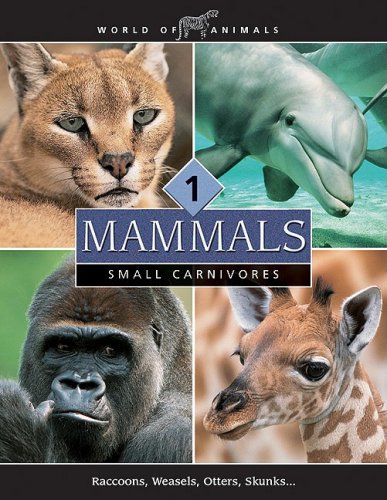
From School Library Journal Grade 6 Up-This set is as comprehensive as it is beautiful. Animals are photographed up close in their natural environment and meticulous drawings are artistically placed. Organization is logical, with each volume containing mammals grouped by family and habitat, such as sea mammals, primates, marsupials, and ruminant (horned) herbivores. Species within a family are listed in each introduction and in the back of the volume but main entries feature only predominate members. Insectivores and Bats states that one-quarter of all known mammal species are bats; a lengthy general section devoted to common features is followed by nine individual portraits. Habitat, feeding habits, reproduction, and relationship to humankind are presented in a readable, narrative style and numerous interesting facts will invite browsing. Only wild animals are included, though domesticated species such as horses, cattle, and llamas are described in introductory essays within the appropriate family. A data panel for each entry presents such facts-at-a-glance as classification, size, diet, population status (specific numbers and risk of endangerment), along with a distribution map. Useful wildlife-organization, club, and museum Web sites (general and volume specific) are listed in each book. This well-organized and wonderfully designed resource will appeal to a range of ages and is easier to use than Maurice and Robert Burton's International Wildlife Encyclopedia (Marshall Cavendish, 2002).