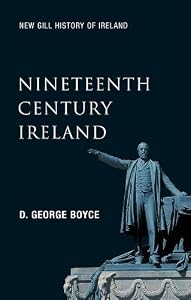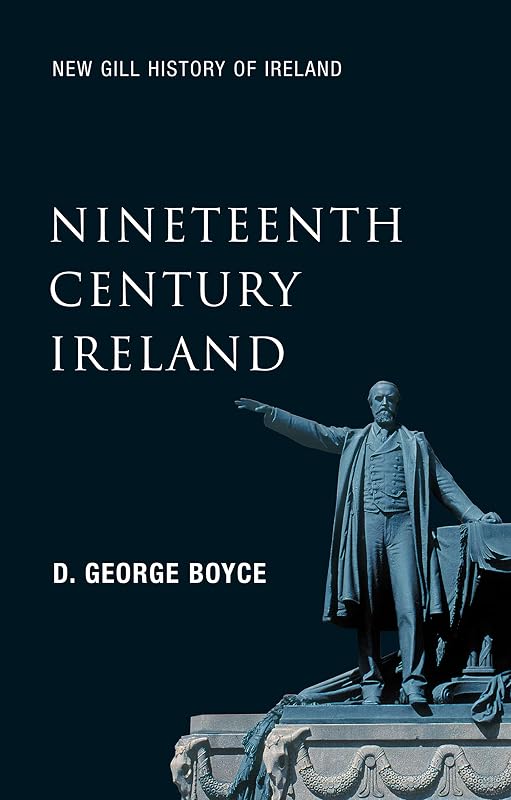
Nineteenth-Century Ireland (New Gill History of Ireland 5): The Search for Stability in the 'Long Nineteenth Century' – The 1798 Rebellion, the Great Potato ... Easter Rising and the Partition of Ireland by D. George Boyce

Nineteenth-Century Ireland (New Gill History of Ireland 5): The Search for Stability in the 'Long Nineteenth Century' – The 1798 Rebellion, the Great Potato ... Easter Rising and the Partition of Ireland

D. George Boyce
525 pages
Gill Books
Sep 2005
Hardcover
Default WSBN
0
Readers
0
Reviews
0
Discussions
0
Quotes

Free account. We’ll keep this book ready while you join.

Find a copy

Formats and availability vary by store. As an Amazon Associate I earn from qualifying purchases.

The elusive search for stability is the subject of Professor D. George Boyce's Nineteenth-Century Ireland, the fifth in the New Gill History of Ireland series.Nineteenth-century Ireland began and ended in armed revolt. The bloody insurrections of 1798 were the proximate reasons for the passing of the Act of Union two years later. The 'long nineteenth century' lasted until 1922, by which the institutions of modern Ireland were in place against a background of the Great War, the Ulster rebellion and the armed uprising of the nationalist Ireland. The hope was that, in an imperial structure, the ethnic, religious and national differences of the inhabitants of Ireland could be reconciled and eliminated.Nationalist Ireland mobilised a mass democratic movement under Daniel O'Connell to secure Catholic Emancipation before seeing its world transformed by the social cataclysm of the Great Irish Potato Famine. At the same time, the Protestant north-east of Ulster was feeling the first benefits of the Industrial Revolution. Although post-Famine Ireland modernised rapidly, only the north-east had a modern economy. The mixture of Protestantism and manufacturing industry integrated into the greater United Kingdom and gave a new twist to the traditional Irish Protestant hostility to Catholic political demands. In the home rule period from the 1880s to 1914, the prospect of partition moved from being almost unthinkable to being almost inevitable.Nineteenth-century Ireland collapsed in the various wars and rebellions of 1912-22. Like many other parts of Europe than and since, it had proved that an imperial superstructure can contain domestic ethnic rivalries, but cannot always eliminate them.Nineteenth-Century Ireland: Table of ContentsIntroduction- The Union: Prelude and Aftermath, 1798-1808- The Catholic Question and Protestant Answers, 1808-29- Testing the Union, 1830-45- The Land and its Nemesis, 1845-9- Political Diversity, Religious Division, 1850-69- The Shaping of Irish Politics (1) : The Making of Irish Nationalism, 1870-91- The Shaping of Irish Politics (2) : The Making of Irish Unionism, 1870-93- From Conciliation to Confrontation, 1891-1914- Modernising Ireland, 1834-1914- The Union Broken, 1914-23- Stability and Strife in Nineteenth-Century Ireland
Join the conversation

No discussions yet. Join BookLovers to start a discussion about this book!

No reviews yet. Join BookLovers to write the first review!

No quotes shared yet. Join BookLovers to share your favorite quotes!

Earn Points
Your voice matters. Every comment, review, and quote earns you reward points redeemable for Bitcoin.
Comment +5 pts Review +20 pts Quote +7 pts Upvote +1 pt
Similar Books
Find books similar to this one
About this book
Pages 525
Publisher Gill Books
Published 2005
Readers 0