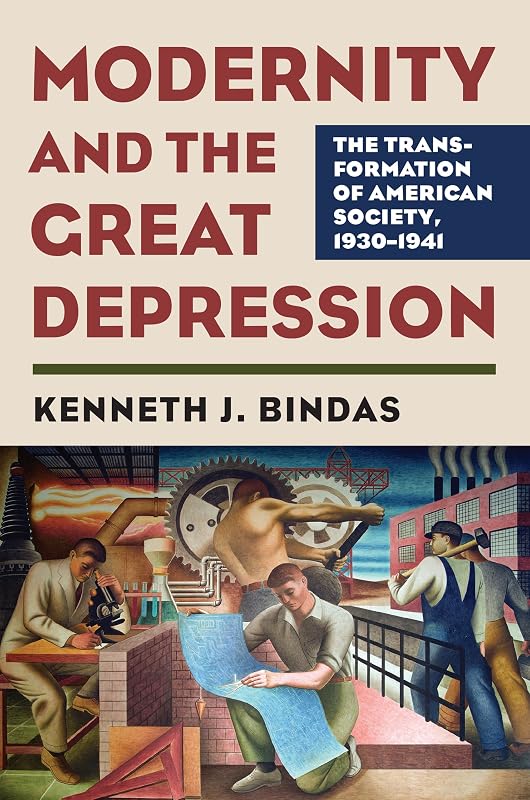
Modernity and the Great Depression: The Transformation of American Society, 1930-1941 (CultureAmerica) by Kenneth J. Bindas

Modernity and the Great Depression: The Transformation of American Society, 1930-1941 (CultureAmerica)

Kenneth J. Bindas
294 pages
University Press of Kansas
Apr 2017
Hardcover
History WSBN
0
Readers
0
Reviews
0
Discussions
0
Quotes

Free account. We’ll keep this book ready while you join.

Find a copy

Formats and availability vary by store. As an Amazon Associate I earn from qualifying purchases.

Order, planning, and reason - in the depths of the Great Depression, with the nation teetering on the brink of collapse, this was what was needed. And this, Kenneth J. Bindas suggests, was what the ideas and ideals of modernity offered - a way to make sense of the chaos all around. In Modernity and the Great Depression, Bindas offers a new perspective on the provenance and power of modernist thought and practice in early twentieth-century America.In the midst of a terrible economic, social, and political crisis, modernism provided an alternative to the response of many traditional moralists and religious leaders. Promoting a faith based in reason, organization, and planning, modernists espoused a salvation that was not eternal but rather temporal, tangible, and, for a generation with so little to hold onto, eminently practical - one that found virtue in pleasure and private pursuits. After surveying the contested definitional terrain of "modernism" and "modernity," Bindas tracks their course and influence through such government programs as the Civilian Conservation Corps and the National Youth Administration; in the massive American Expositions and World's Fairs that heralded progress and a better future; on the efforts of women interior decorators to update and enhance the comforts of the modern home; and - thanks to the proliferation of electricity and radio - on the popular and high-culture musical recordings and broadcasts that reinforced a shift away from traditional modes of performance and reception.In the transformation he describes, Bindas also locates the limits of modernism's influence, as later generations confronted the spiritual shortcomings of its ultra-rationalist and materialist paradigm.
Join the conversation

No discussions yet. Join BookLovers to start a discussion about this book!

No reviews yet. Join BookLovers to write the first review!

No quotes shared yet. Join BookLovers to share your favorite quotes!

Earn Points
Your voice matters. Every comment, review, and quote earns you reward points redeemable for Bitcoin.
Comment +5 pts Review +20 pts Quote +7 pts Upvote +1 pt
Similar Books
Find books similar to this one
About this book
Pages 294
Publisher University Press of...
Published 2017
Readers 0