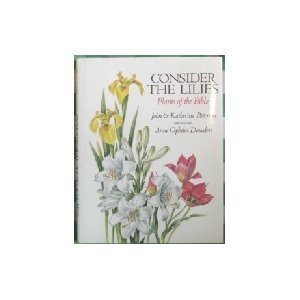
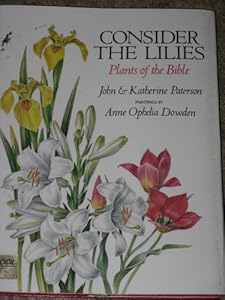
From School Library Journal Grade 5 Up Handsomely presented material on 45 shrubs, crops, trees, weeds, fruits, and flowers mentioned in the Old and New Testaments with emphasis on the rich symbolic values of each. Divided into three groupsplants of Revelation, Necessity, and Celebrationeach plant is cited in a Bible story or passage (quoted from the King James, New English, or Revised Standard versions of the Bible or paraphrased with graceful dignity). Plants of Revelation include the apple in the Garden of Eden, Jeremiah's Balm of Gilead, the mustard seed, etc. Plants of Necessity are foods such as Esau's lentils and Ruth's barley. Solomon's lily, the oils of anointment, and palm branches represent some of the plants of Celebration. Sometimes the categories overlap, as with the olive and the grape, which fit into all three, but the groupings help give order to the work. Most of the plants are shown, alone or in groups, in meticulous and elegant color illustrations painted from living specimens and shown two-thirds of their actual size. Botanic names are given. Each is accompanied by a lengthy caption discussing the Biblical history, usages, and symbolic meanings. Added beauty is given by an attractive variety of clear type-faces. Carol Lerner's A Biblical Garden (Morrow, 1982) is also a fine book on this subject, but it covers only half as many plants and uses only citations from the Old Testament. Pat Pearl, First Presbyterian Church Library, Martinsville, Va..Copyright 1986 Reed Business Information, Inc. Review "A visual delight which may find an audience with both Bible students and naturalists." (