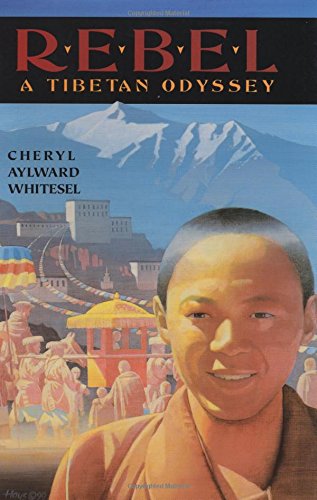
From Publishers Weekly Whitesel sets her ambitious first novel against the backdrop of a mysterious, uninfiltrated turn-of-the-century Tibet, with mixed results. When Thunder, an adventuresome and inquisitive boy, goes against his parents' wishes, they send him to live with his uncle in a monastery, where a series of adventures and misadventures unfold. The author intermittently integrates descriptions of the food, mercantile system and customs of the time, and includes a glossary of Tibetan words. But because these details of daily life aren't consistently woven into the novel, they call attention to themselves instead of shedding light on time and place. The narrative brushes over definitions and explanations through the course of the story, leaving readers to flip back and forth to the glossary. The Tibetans here live under the threat of invasion by Fringies (foreigners), against which they furiously, if futilely, attempt to protect themselves; the sense of danger is palpable. But many questions remain unanswered. For example, Thunder is under the tutelage of his lama uncle, but readers never see him at his studies and learn little of what they entail. Also, Thunder is chosen to be the playmate of the new young Tulku lama, but the novel doesn't explain the significance of the Tulku lama to the monastic community or what his daily life is like. Whitesel succeeds in creating sympathetic characters in Thunder, the Tulku lama and Thunder's friend, Seventh Hand, even if she doesn't quite bring their world to life. Ages 10-up. Copyright 2000 Reed Business Information, Inc. From School Library Journal Grade 5-8-As the 19th century turned into the 20th, most of the world was open to travelers. One exception was Tibet, a closed society whose people believed an eighth-century prophecy that caused them to prohibit any foreigners from entering their country; those who did were often brutally murdered. Unfortunately, the flap copy gives the only clue as to when this story takes place. When Thunder becomes separated from his younger brother and uncle during a fierce rainstorm, he becomes anxious and exhausted. Found by a foreigner who gives him some medicine, he returns home. When his family realizes he had been in contact with a "fringie," they protect him from the wrath of the villagers by sending him to live with his uncle, an important lama in a Buddhist monastery. Working first in the kitchen and later living as an apprentice monk, Thunder finds himself immersed in a world of gentle ritual and sometimes frightening power. Whitesel paints a convincing picture of this world, full of unfamiliar sights, strange people, and a harsh landscape. Many fascinating, well-developed characters fill the pages-fearsome Pounder, the captain of the soldiers; kind, crippled Seventh Hand, the kitchen boy; and Samjam Rimpoche, the tulku who wishes he was still Little Radish-though their actions sometimes are more useful to the plot than true to their natures. Still, despite too many coincidences, Thunder's quest to understand who he is and where he belongs is compelling.