Little Oh
Laura Krauss Melmed
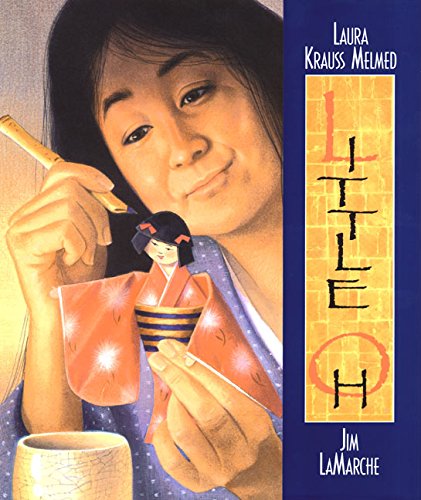
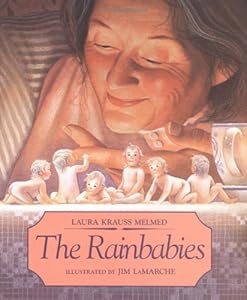
From School Library Journal Kindergarten-Grade 4. This appealing original fantasy set in old Japan reunites the creators of The Rainbabies (Lothrop, 1992). This story, too, features a magical child, an origami paper doll made by a woman who lives alone and works as a potter. The woman puts the doll in a lacquer box beside her bed at night, and the next morning the doll comes to life and names herself after the woman's astonished exclamation. Delighted with the living paper doll that calls her "mother," the woman tries to protect the tiny, fragile child from harm. Inevitably, Little Oh becomes lost and embarks on a series of dangerous adventures before she finds her way back home. Along the way, Little Oh meets a man and his son, who needs a mother, and her own final transformation brings the story to a satisfying conclusion. While the narrative echoes folktales told around the world, the realistic colored paintings establish setting and character with loving specificity. Each double-page spread, elegantly balancing art and text, takes a carefully imagined point of view. Whether long shots or close-ups, the illustrations resonate with the changing emotions of the story: love, danger, loss, flight, reunion. The artwork celebrates imperial Japan: the familiar subjects of Japanese art, mountains and mist, gardens, pine trees, reeds, and a flying crane are rendered accurately in fresh, original interpretations. The artist's precise portraits of the characters, captured mid-gesture, invite readers into the heart of this warm, old-fashioned story.?Margaret A. Chang, North Adams State College, MACopyright 1997 Reed Business Information, Inc. From Kirkus Reviews Like these collaborators' The Rainbabies (1992), this work has parental love as its theme. Little Oh, an origami girl who has come to life for her creator, a lonely Japanese woman, is lost one day in a bustling market. She is chased by a hungry dog, floated down a foaming cataract in a teacup, and flown homeward by a friendly crane. A motherless boy finds her, and when he and his father return Little Oh to her mother, the paper girl miraculously becomes a human child, the man and woman fall in love and marry, and Little Oh's family is complete. This new work belongs in the company of such standards as The Steadfast Tin Soldier, Pinocchio, The Peach Boy, and Thumbelina. Once again, LaMarche demonstrates his extraordinary ability to portray emotions in the human face, and his soft mixed-media paintings are filled with details of exceptional beauty: cracks in the glaze of a porcelain cup, the sheen of orange skins, evergreens blanketed in golden early-morning mist. A flawless work: Readers are certain to look carefully at Little Oh's folds, and attempt to make an origami doll, too. (Picture book. 4+) --