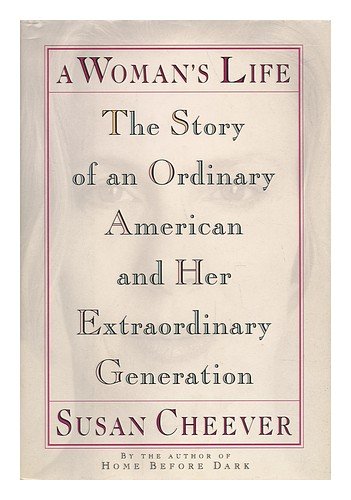
From Publishers Weekly Linda Green, a 1960s hippie who lived on a Vermont commune, took LSD and let herself be pushed into an open marriage by her bullying, pot-smoking first husband, is now a suburban mother of two, a high-school Spanish and French teacher and a Boston lawyer's wife "settled into a routine that is both conventional and bourgeois." But Linda, 46, is no sellout, in Cheever's ( Home Before Dark ) empathic, beautifully controlled portrait. Instead, she is emblematic of "the average American woman, unrecognized, unknown, and often unappreciated, trying to hold it all together--family, job, health, attractiveness, sanity." Daughter of a Brooklyn hat salesman who moved his family to Passaic, N.J., Linda, by this account, was molded by a manipulative mother who instructed her to act as if she were always having fun. After her rebellious first marriage collapsed, she moved in with her former student, Clint Donahue, marrying him in 1978. Despite their considerable difference in age and religion (he's a devout Catholic, she's Jewish), their marriage has weathered crises--in no small measure, Cheever suggests, because of Linda's tireless accommodation to the needs of her husband and two daughters. Author tour. Copyright 1994 Reed Business Information, Inc. From Library Journal Cheever's initial idea for her biographical subject was a remarkable famous woman, but she decided instead on a supposedly average woman without the privileges and limited scope of most heroines. Cheever's revised thesis required a woman emblematic of her generation, and Linda Green, a 45-year-old schoolteacher with two children, appeared to be a likely candidate. Cheever fails to transform Green into an "everywoman;" instead, she exposes and examines Green's strengths and weaknesses, manipulations by her family, and challenges in maintaining a balance between her professional and domestic life. While the changing values and attitudes of Green's generation do affect her outlook, this is really a case study of how certain pressures and conditions have affected the life of one person. Cheever has previously written in the biographical mode about her own family (Home Before Dark, Houghton, 1984; Treetops, LJ 3/15/91), and she is honest, compassionate, subjective, and voyeuristic, all which work to this book's advantage. Recommended for both public and academic libraries.