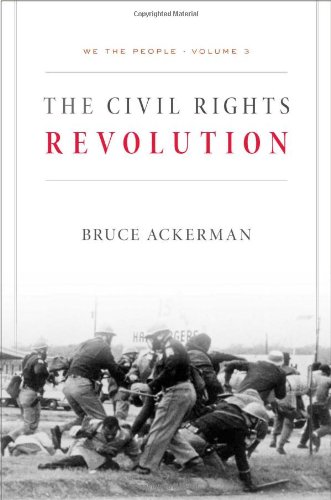
The Civil Rights Revolution carries Bruce Ackerman's sweeping reinterpretation of constitutional history into the era beginning with Brown v. Board of Education. From Rosa Parks's courageous defiance, to Martin Luther King's resounding cadences in "I Have a Dream," to Lyndon Johnson's leadership of Congress, to the Supreme Court's decisions redefining the meaning of equality, the movement to end racial discrimination decisively changed our understanding of the Constitution. Ackerman anchors his discussion in the landmark statutes of the 1960s: the Civil Rights Act of 1964, the Voting Rights Act of 1965, and the Fair Housing Act of 1968. Challenging conventional legal analysis and arguing instead that constitutional politics won the day, he describes the complex interactions among branches of government--and also between government and the ordinary people who participated in the struggle.