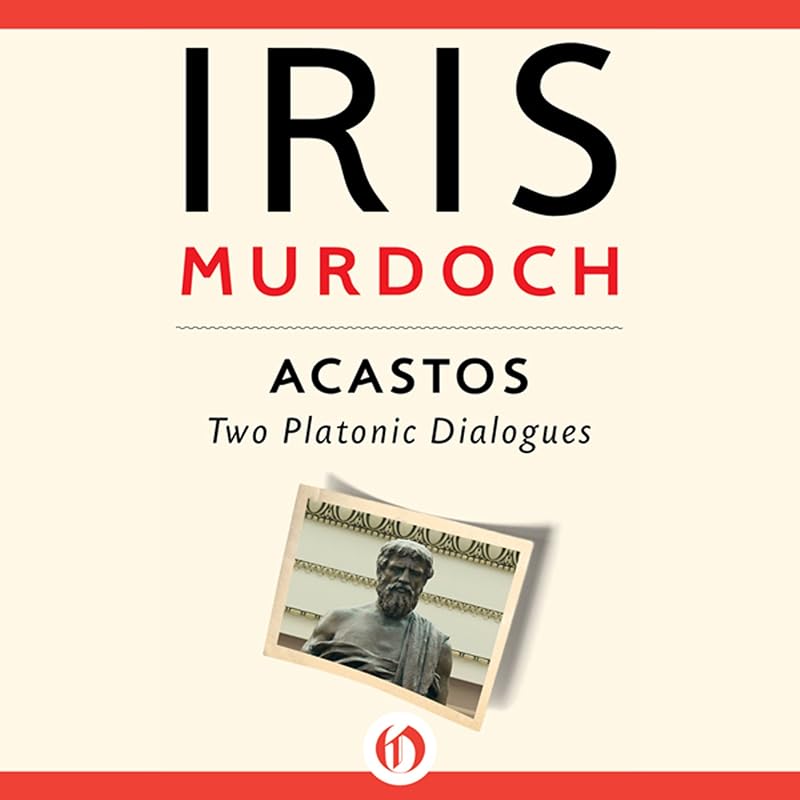
Acastos: Two Platonic Dialogues
Iris Murdoch
Acastos: Two Platonic Dialogues is Murdoch's philosophical masterpiece featuring fictionalized discussions between the intellectual giants of the classical world, including Socrates and Plato. Described by Acastos, a friend of Plato's, the riveting debates center on the nature of goodness and faith, told through the voices of history's most celebrated thinkers.
Witty and profound, these debates apply the timeless wisdom of history's renowned philosophers to the most contentious issues of the modern day.
Read more FROM PUBLISHERS WEEKLY
Is art primarily a diversion for the masses, or, as the youth Acastos, friend of Plato, insists, a kind of "deep wise thinking"? Murdoch, whose novels wrestle with large philosophical questions, here sets forth her views on art, morality, religion and Eros through imaginary dialogues between Plato, Socrates and sundry fictional characters. She clearly believes that good art tells us more about our lives than any other kind of thought; Acastos's vision triumphs over Plato's hostility to art, a cynic's withering comments and the pragmatic outlook of Mantias, a vulgar Marxist of sorts. In the dialogue on religion, Socrates waxes poetic ("Religion is our love of virtue lightening the present moment") ; his almost Buddhist reverence ("God is everywhere") provides counterpoint to Plato's view that religion is a safety valve, a haven of absolutes that keeps us from going crazy and helps us to face life's horrors.
Copyright 1986 Reed Business Information, Inc. FROM LIBRARY JOURNAL
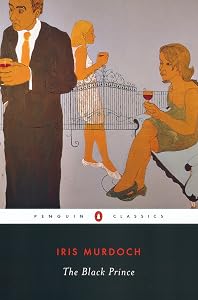
It should not surprise that Murdoch has chosen the Platonic dialogue for her latest foray into morality, art, and religion. It is, after all, a form she has successfully adapted at strategic points in several novels. The first dialogue, "Art and Eros," depicts a conversation between Socrates and several friends (including Plato) about the definition of art. The second, "Above the Gods," asks many searching questions about mythology, morality, and faith in religion. The dialogues are witty and profound, as one would expect from Murdoch, yet the ideas presented in Acastos have been better worked out, in a truly Platonic sense, in her best novels, such as The Black Prince and A Fairly Honourable Defeat, and in her philosophical work, The Sovereignty of Good. For academic and larger public libraries. Laurence Hull, Cannon Memorial Lib., Concord,
Copyright 1986 Reed Business Information, Inc. REVIEW
"Witty and profound." - The Library Journal"[Murdoch is] prodigiously inventive." - The New York Times"One of the most significant novelists of her generation." - The Guardian
ABOUT THE AUTHOR
Iris Murdoch (1919-1999) is the author of twenty-six novels, including Under the Net, The Black Prince, and The Sea, The Sea, as well as several plays and a volume of poetry. Murdoch taught philosophy at Oxford before leaving to write fulltime, winning such literary awards as the Booker Prize and the PEN Gold Pen for Distinguished Service to Literature.
Read more