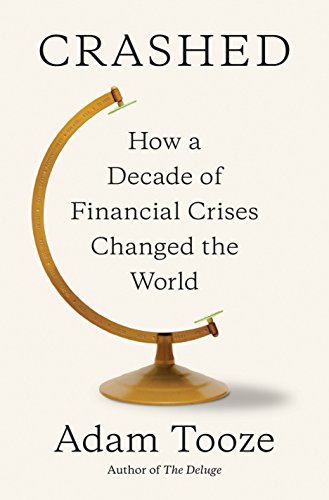
Crashed: How a Decade of Financial Crises Changed the World by ADAM TOOZE
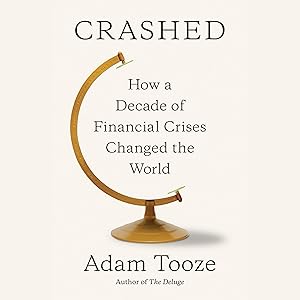
Crashed: How a Decade of Financial Crises Changed the World

ADAM TOOZE
720 pages
Viking
Aug 2018
Business & Investing WSBN
3
Readers
1
Reviews
0
Discussions
0
Quotes
From a prizewinning economic historian, an eye-opening reinterpretation of the 2008 economic crisis (and its ten-year aftermath) as a global event that directly led to the shockwaves being felt around the world today.<br><br>In September 2008 President George Bush could still describe the financial crisis as an incident local to Wall Street. In fact it was a dramatic caesura of global significance that spiraled around the world, from the financial markets of the UK and Europe to the factories and dockyards of Asia, the Middle East, and Latin America, forcing a rearrangement of global governance. In the United States and Europe, it caused a fundamental reconsideration of capitalist democracy, eventually leading to the war in the Ukraine, the chaos of Greece, Brexit, and Trump. <br><br>It was the greatest crisis to have struck Western societies since the end of the Cold War, but was it inevitable? And is it over? <i>Crashed</i> is a dramatic new narrative resting on original themes: the haphazard nature of economic development and the erratic path of debt around the world; the unseen way individual countries and regions are linked together in deeply unequal relationships through financial interdependence, investment, politics, and force; the ways the financial crisis interacted with the spectacular rise of social media, the crisis of middle-class America, the rise of China, and global struggles over fossil fuels. <br><br>Finally, Tooze asks, given this history, what now are the prospects for a liberal, stable, and coherent world order?

No discussions yet. Join BookLovers to start a discussion about this book!

Deep Into the Financial Nuts and Bolts

This a very, very informative book about the financial crash of 2008 and its lengthy recovery. The British author is a fine writer and definitely appears to master the subject. His background is as an economic historian and his approach to the financial collapse is thru the lens of political economy. For a European, he is very charitable towards the failures of the US markets and the responses of the US govt in the crisis. In fact, he is much more critical of the Germans and the British and the EU govts in their involvement in the crisis and their failure to more effectively guide the Eurozone out of the financial crisis. The book is somewhat dense and daunting and is 616 pages of text. Definitly not for the faint of heart or those who are not somewhat financially and economically literate. It does not lend itself to speed reading. A glossary and list of abbreviations would have been very helpful--as other commenters have suggested. Abbreviated acronyms of organizations, treaties, agreements,govt agencies, etc. come flying fast and furious. Still, with due and diligent effort on the part of the reader, you can see how very well the author knits his technocratic financial narrative together. The negative reviews often seem poorly informed. It's a difficult book to get thru. Some readers appear to dislike the author because he is a Keynesian liberal. I understand that, but they should note that he tends to be very positive about US govt financial leadership leading the world out of the crisis. Some don't like the fact that he thinks Trump is a grifter. Unfortunately, Trump is, irrefutably, a grifter and a con man. The only areas where I found myself disagreeing with the author were on the issues of immigration and protectionism. The Eurozone and the US cannot support unrestricted immigration. There are too many millions in the world of 8 billion people who would kick down the gateways of either entitity to gain entry. Unrestricted immigration is an existential thre...

No quotes shared yet. Join BookLovers to share your favorite quotes!